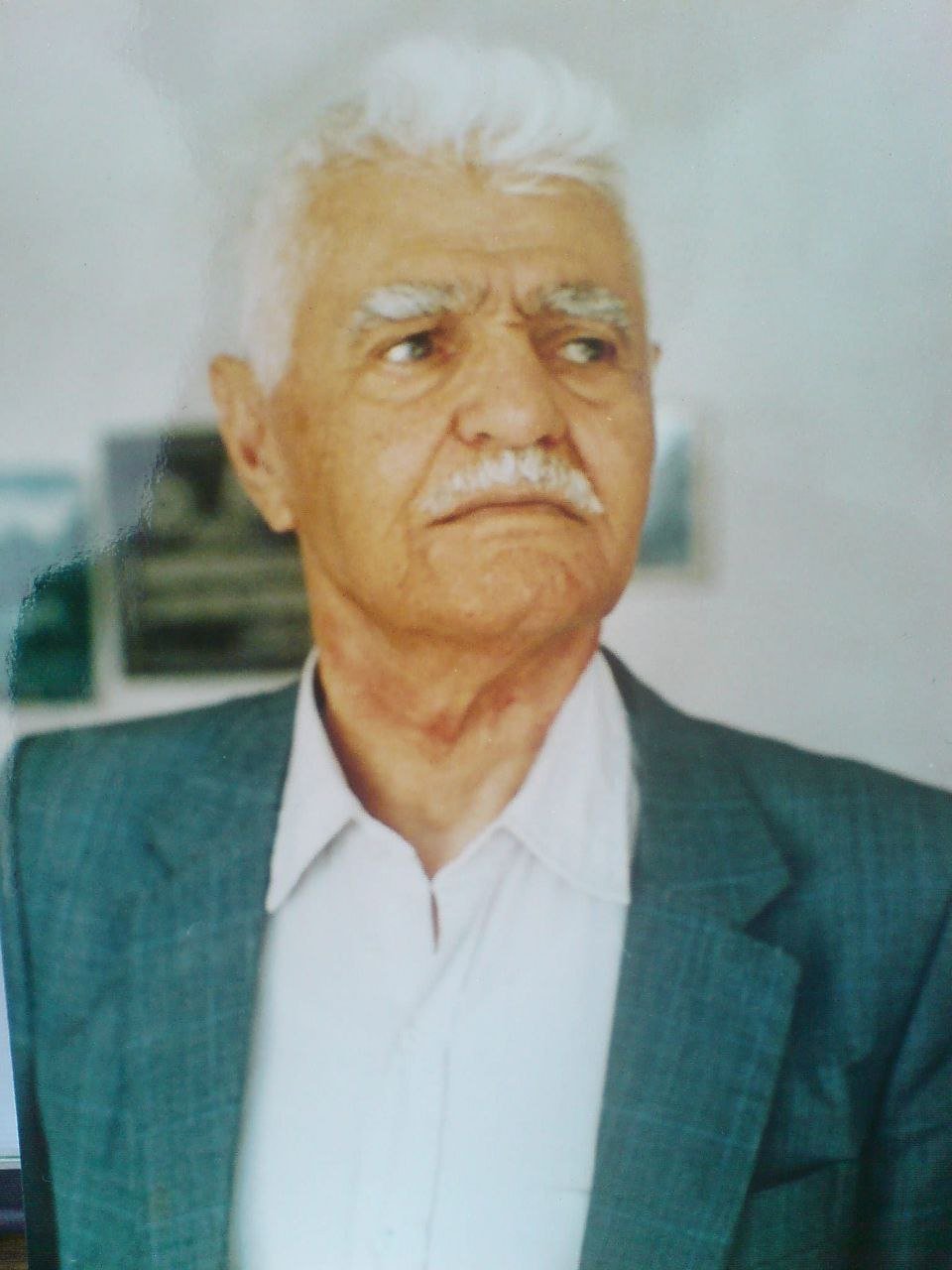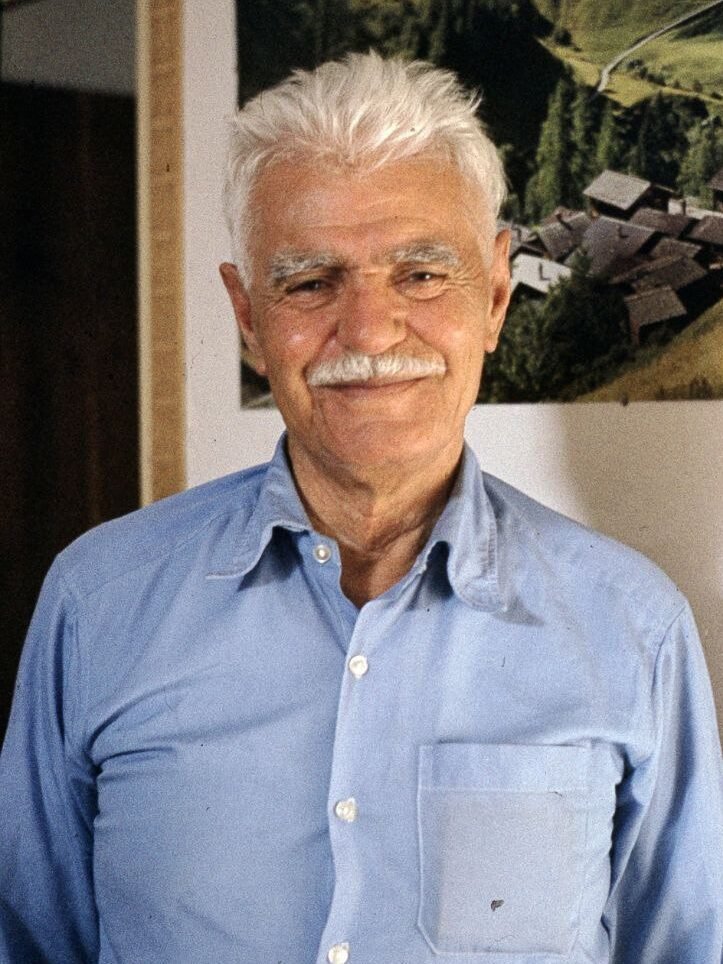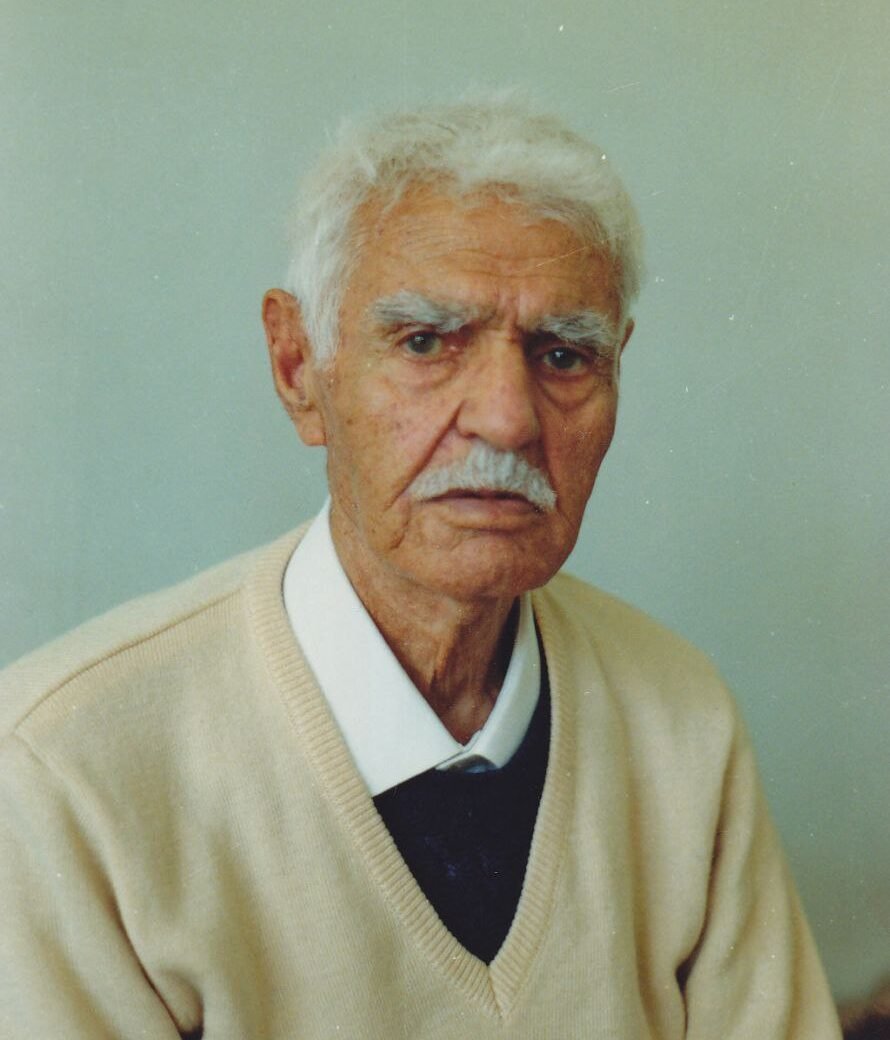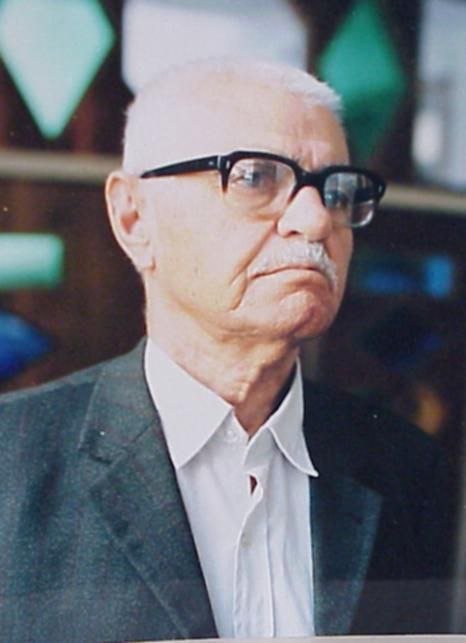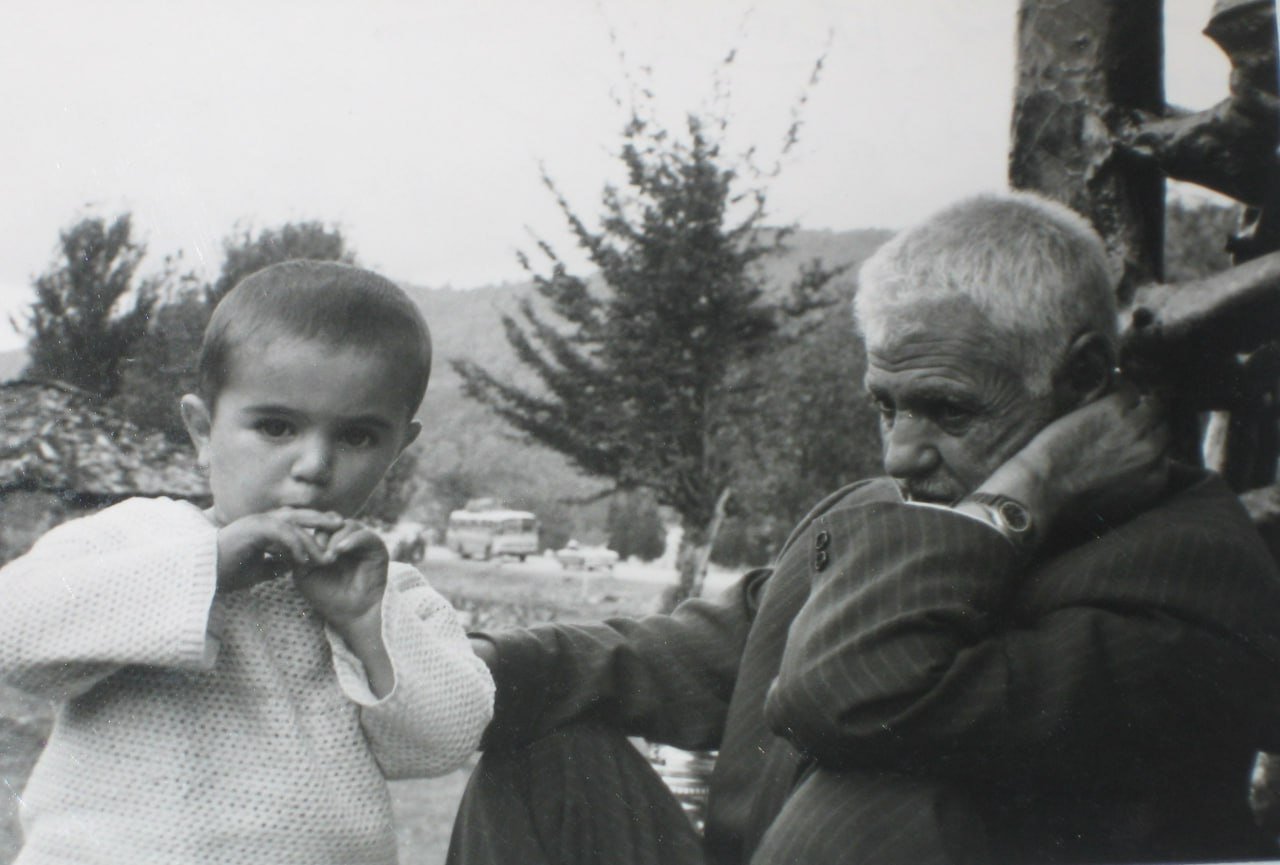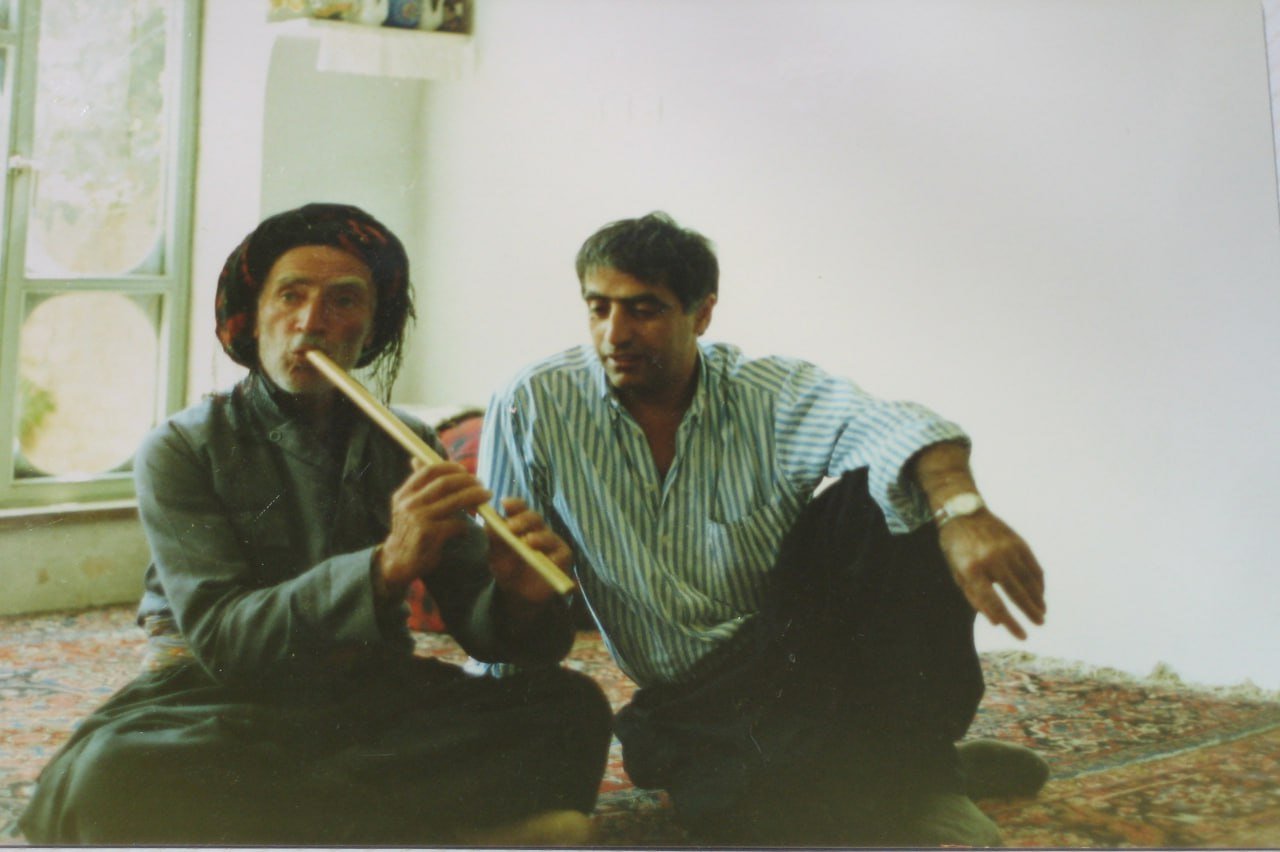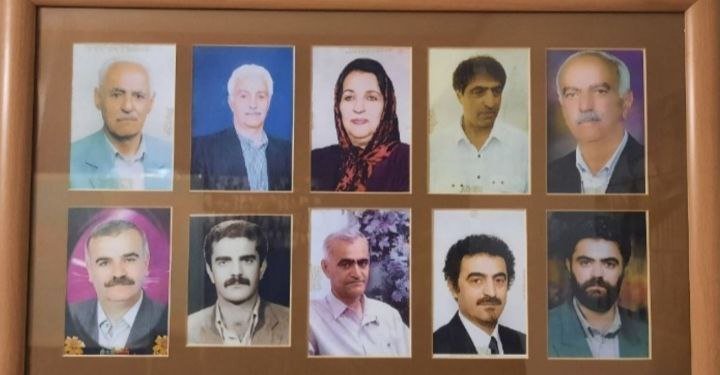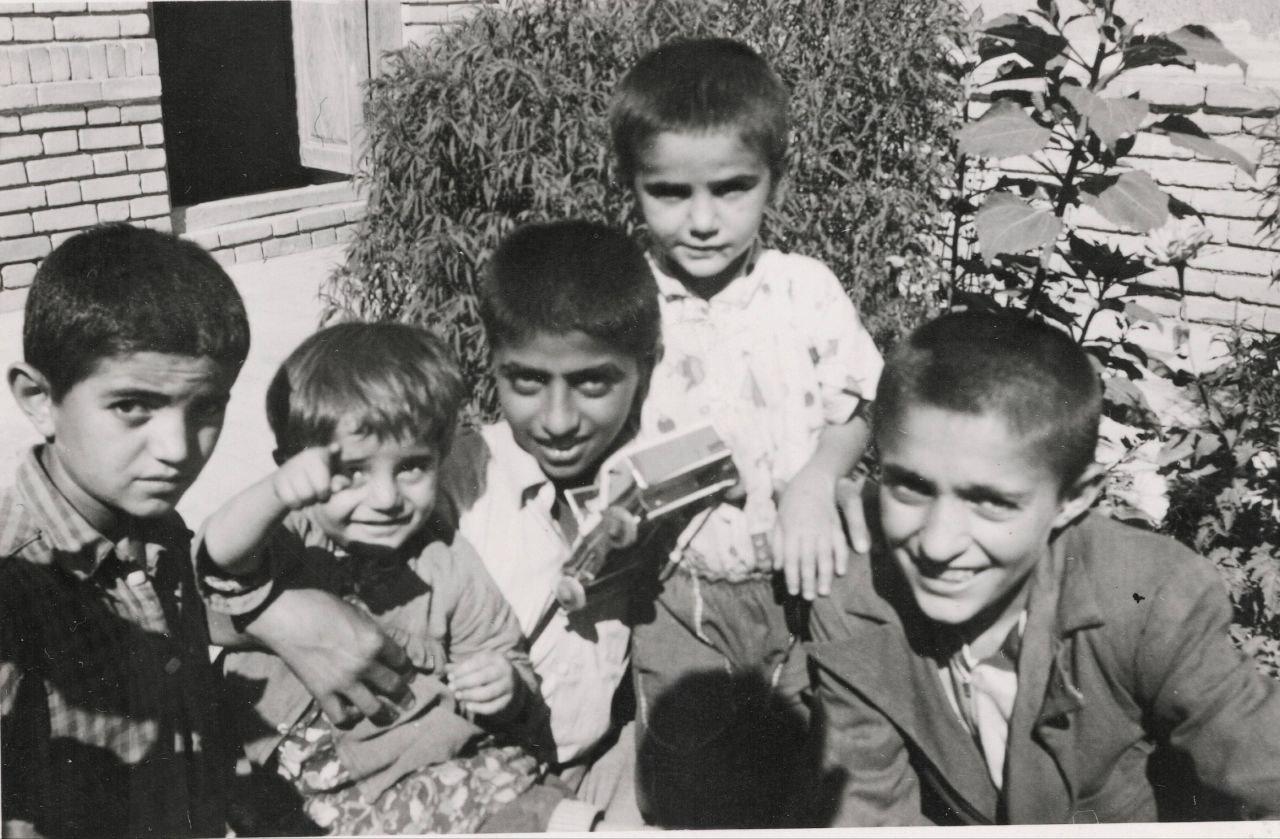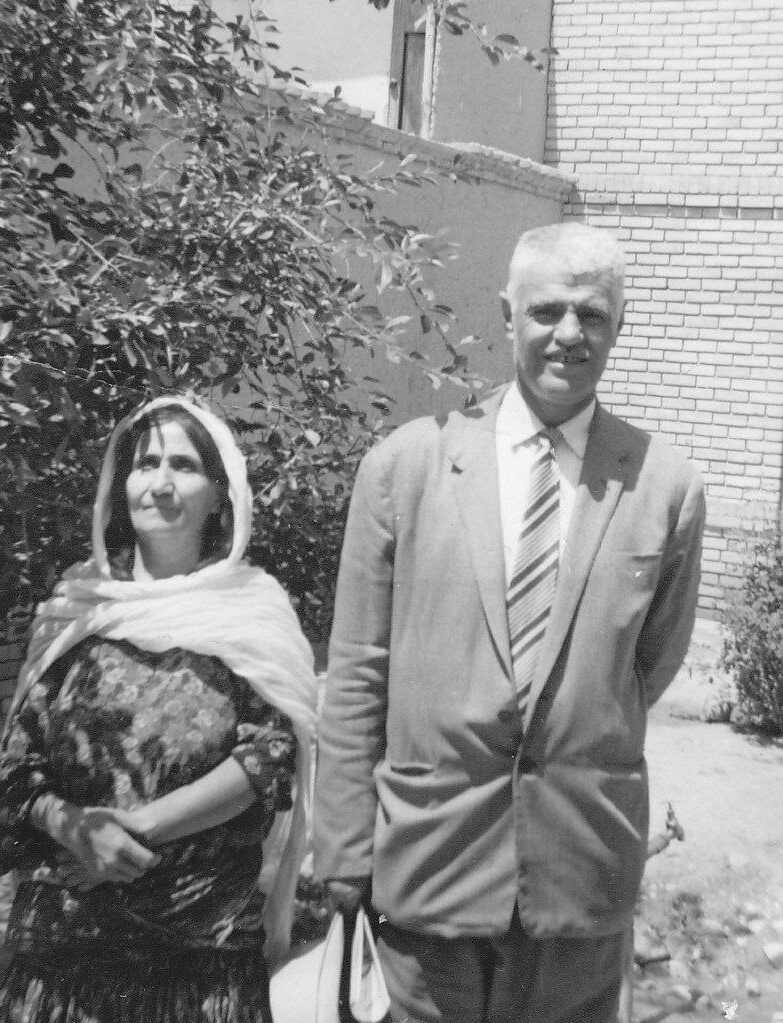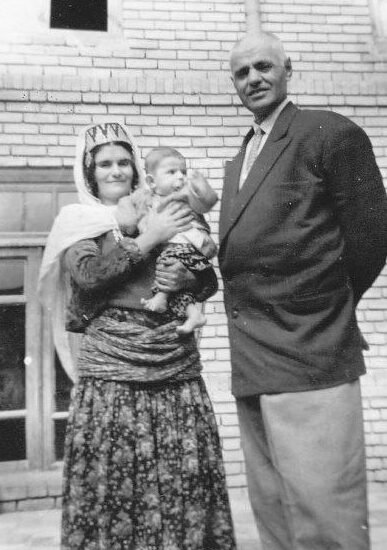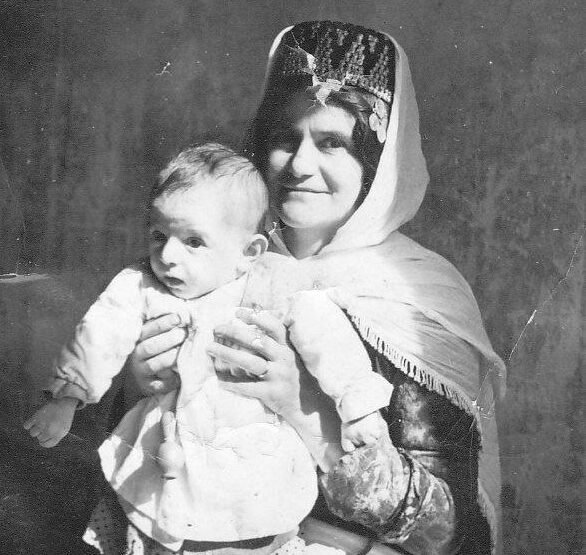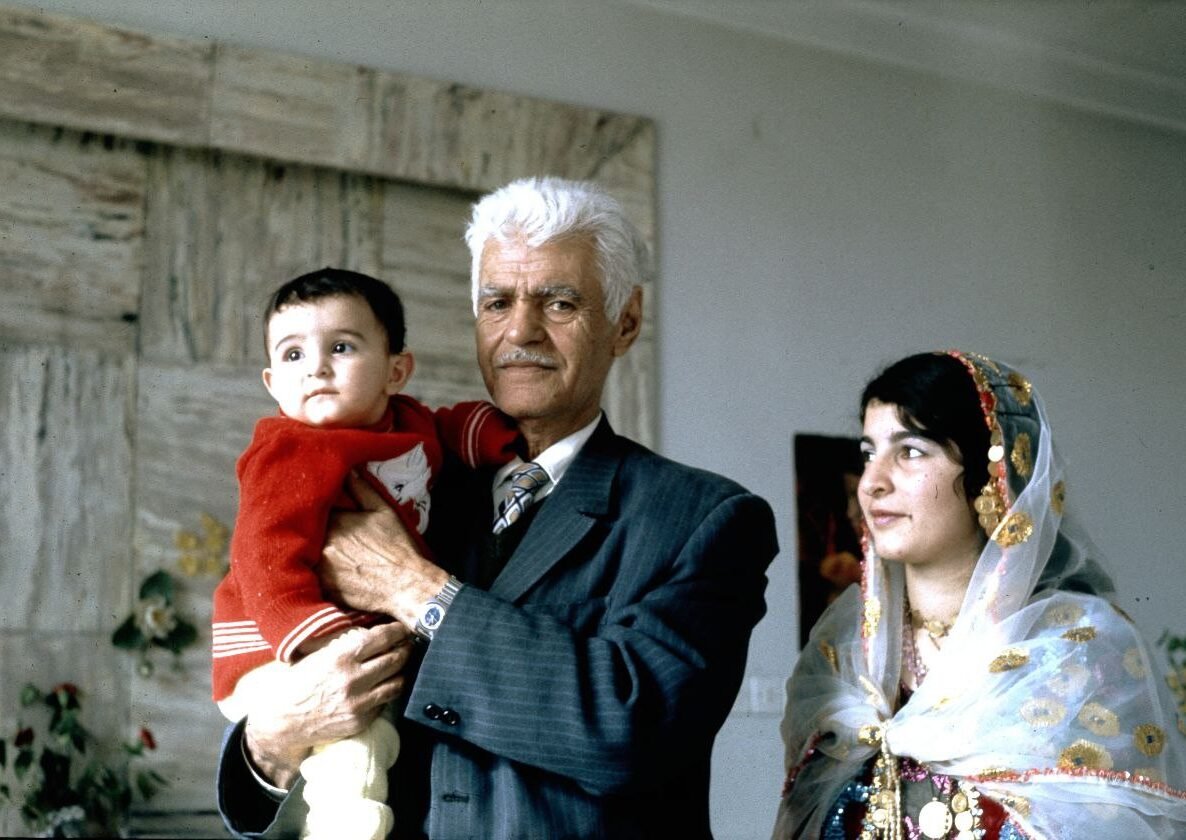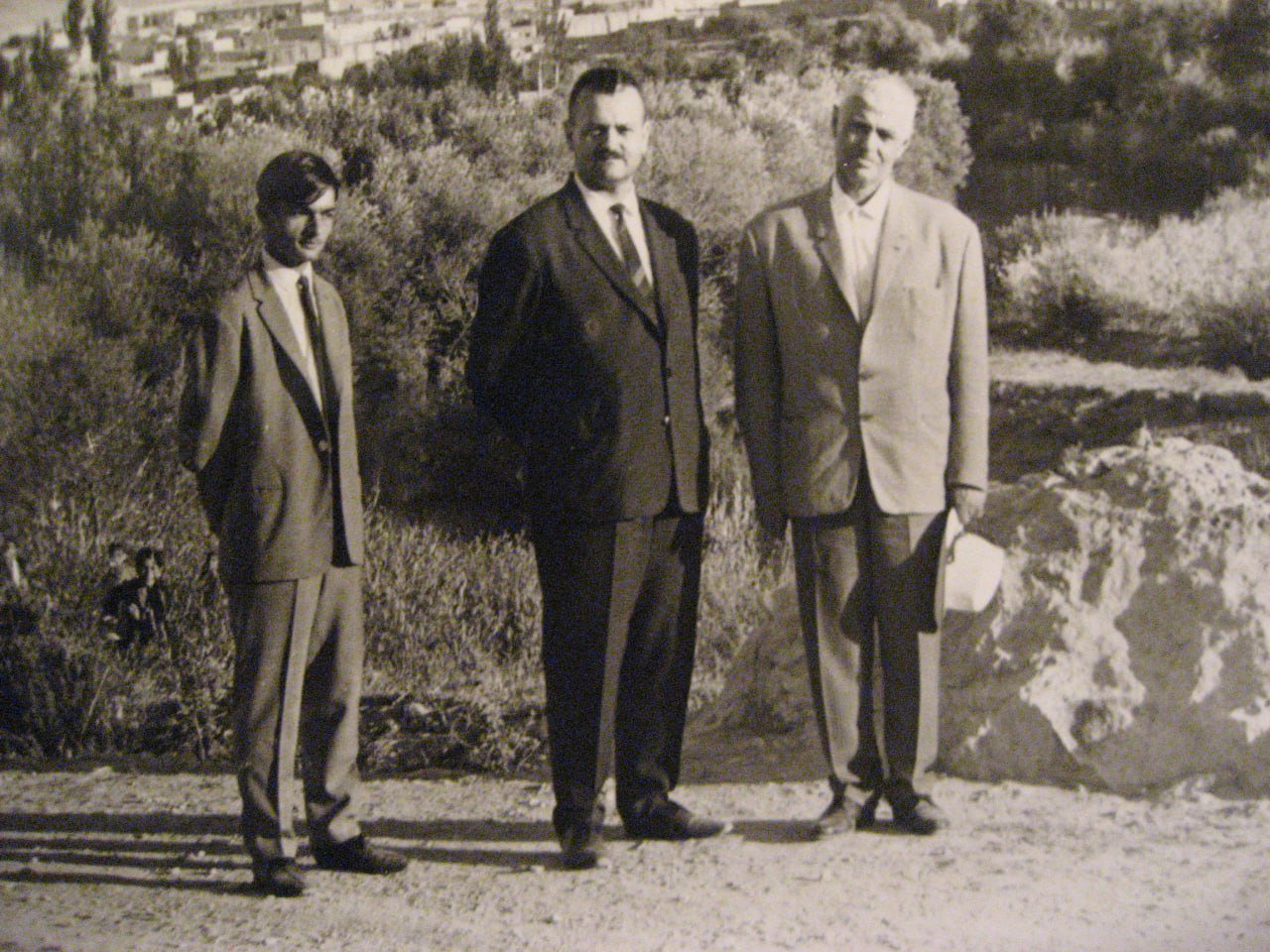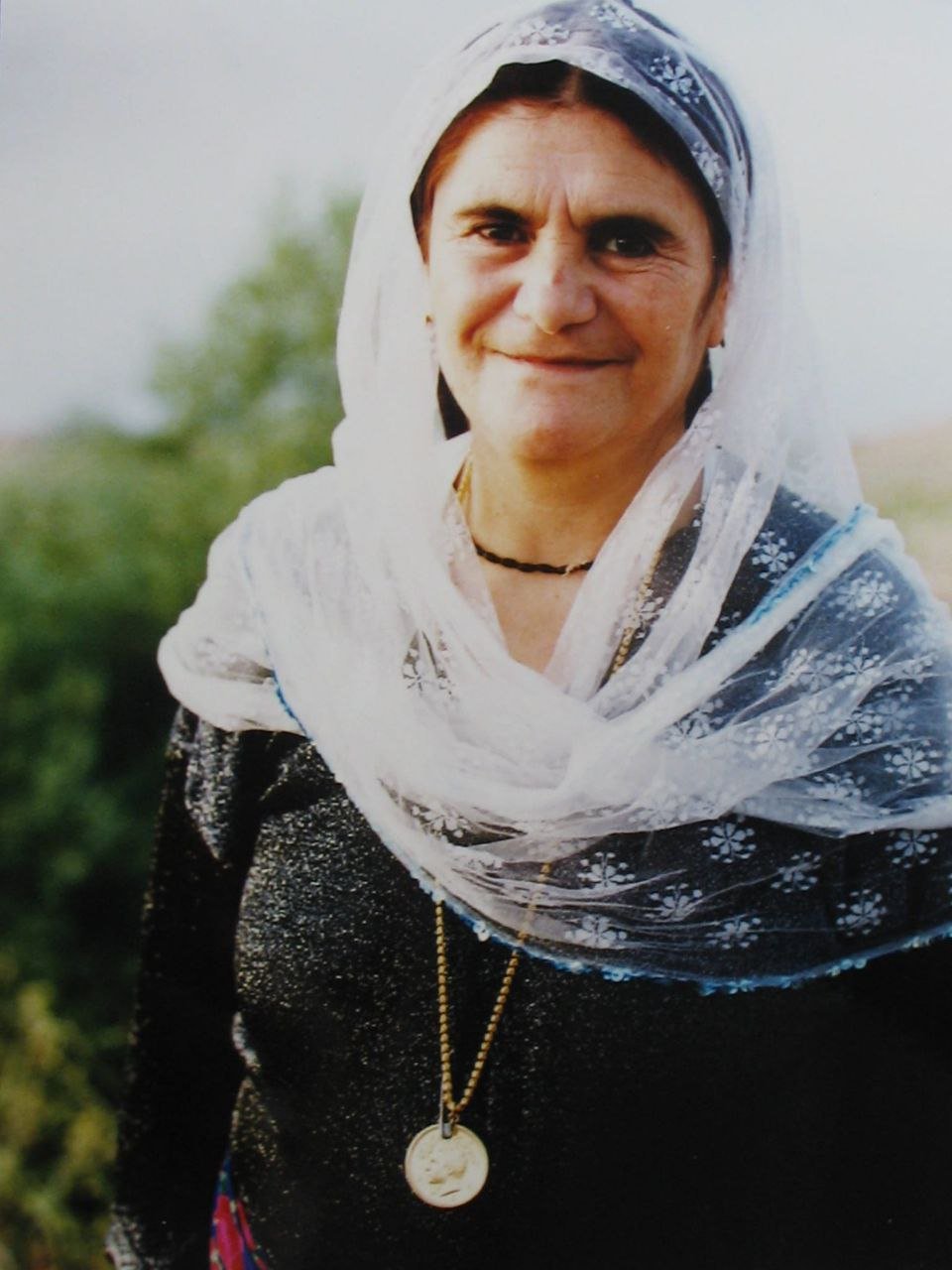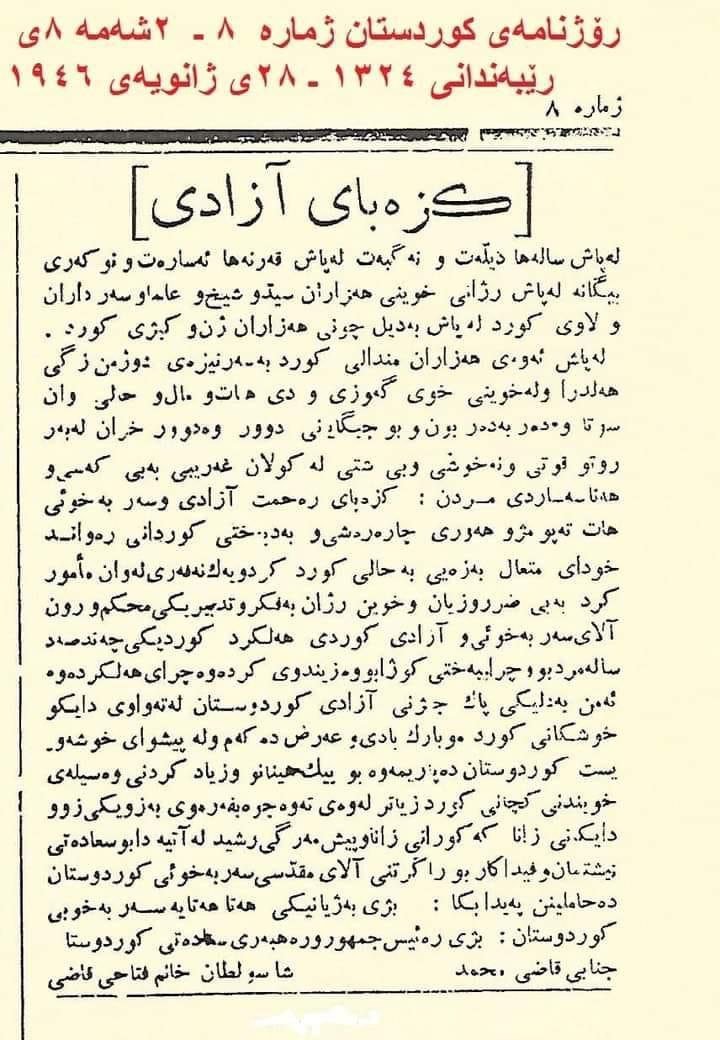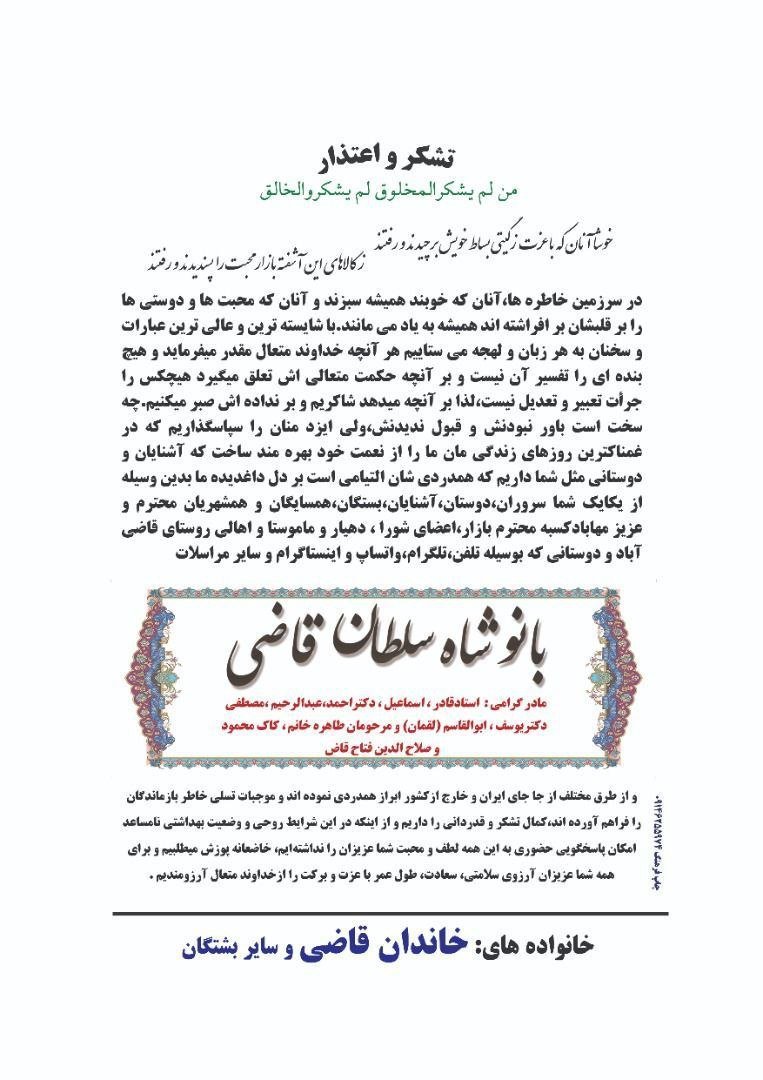
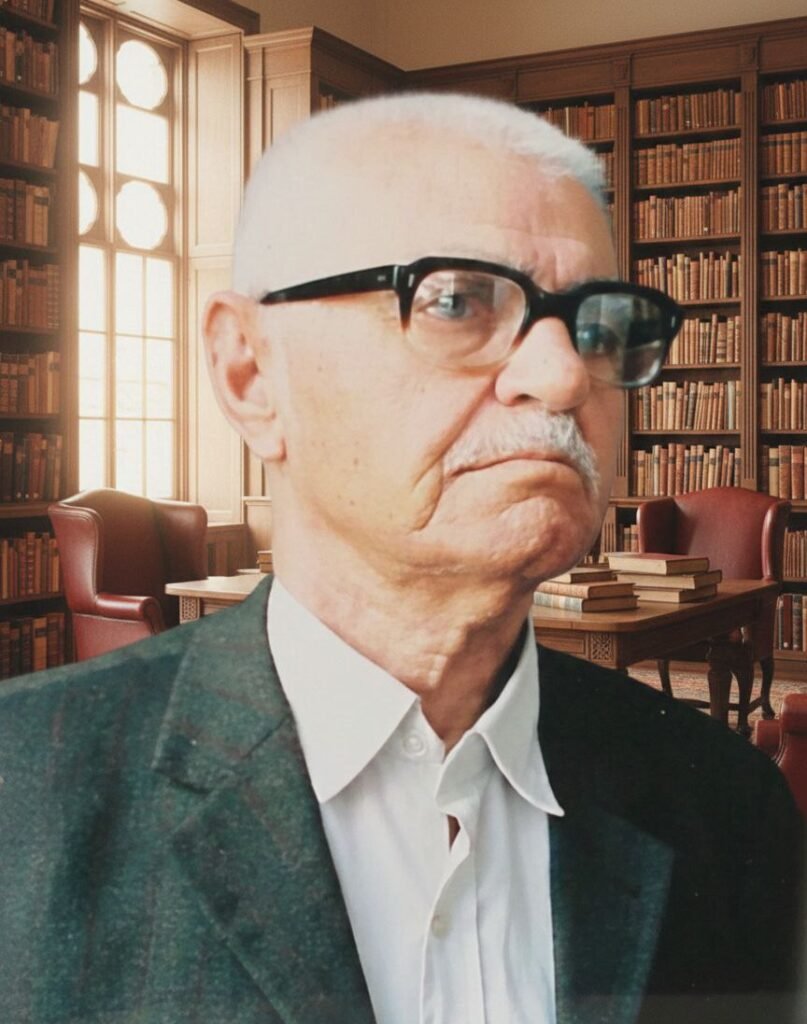
Khalil Fattah Qazi, the son of Mirza Rasul and Gowhartaj Khanum Qazi, was born in 1906 (1285 Solar Hijri) in the village of Bakhcheh within the Mokriani Sharqi region of Mahabad. His lineage traces back through several generations of esteemed figures: he was the grandson of Mirza Khalil the Elder, great-grandson of Mirza Rahman, and great-great-grandson of Mirza Abdullah, the son of Mirza Mahmoud Qazi. The latter was a renowned calligrapher celebrated for his exquisite handwritten transcriptions of the Holy Quran. Khalil’s mother, Gowhartaj Khanum, was the daughter of Haji Qazi Latif. Khalil was one of ten children born to Mirza Rasul and Gowhartaj Khanum, alongside his siblings Hassan, Fatemeh, Aminah, Fattah, Hossein, Zeinab, Razzaq, Razieh, and Maryam. Education and Early Career In his childhood, Khalil and his younger brother, Hassan, were sent by their father to study the Quran, Arabic, and Persian under the tutelage of a local cleric. Following a period of local pressure from neighboring landlords, Mirza Rasul was forced to sell his share of the Bakhcheh village and relocated the family to Daralak in the Sharviran region. Later, with the assistance of Haji Qazi Latif and in partnership with Mirza Jalil Qazi, Mirza Rasul repurchased the villages of Gol and Chomalan from his relatives, beginning a new chapter of life there. Following these transitions, Khalil and Hassan were sent to Mahabad to enroll in formal schooling at the Saadat School, entering the second and third grades. In 1923 (1302 SH), Khalil was appointed as a primary school teacher by the head of education, Mirza Abulhasan Saifi Qazi, earning a monthly salary of seventy Qiran. While teaching, he continued his own studies, steadily advancing his education and administrative expertise. Professional Life As his qualifications grew, Khalil transitioned into the civil service. He initially worked for the Finance Department and later joined the Tobacco Department (Dokhaniat). He eventually rose to the position of Director of the Tobacco Department in Mahabad, a role in which he served with distinction. In 1951 (1330 SH), he was transferred to Tabriz, where he resided until his retirement in 1971 (1350 SH). In 1976 (1355 SH), he returned to his hometown of Mahabad with his family. Family Mirza Khalil married twice during his lifetime. His first marriage was to Fatemeh Khanum, daughter of Mulla Jalal Mo'tamed-ol-Olama and Buzurg Khanum; they had five children: Qader, Ismail, Tahereh Khanum, Ahmad, and Mahmoud. His second marriage was to Shasultan Khanum Qazi, daughter of Mirza Wahhab, with whom he had five sons: Rahim, Salahuddin, Mustafa, Yusuf, and Abulqasim (Luqman). Literary Legacy Beyond his reputation as a respected intellectual, Mirza Khalil was a gifted writer with a powerful command of the pen. Drawing from his own tumultuous life experiences and the significant socio-political shifts of his era, he authored several notable works, including: Sal-hay-e Ezterab (Years of Anxiety) Tarikhcheh-ye Khanvadeh-ye Qazi dar Velayat-e Mokri (The History of the Qazi Family in the Mokri Region) Both volumes were published under the supervision of Professor Qader Fattahi Qazi. The second book was later translated into Kurdish by Professor Hassan Qazi under the title Kurte Mikhûyî Binemaley Qazî le Nawçey Mukriyan. As noted by Professor Qader Fattahi Qazi in the preface to Years of Anxiety, Mirza Khalil possessed a lifelong passion for reading and the pursuit of knowledge—a commitment he maintained until his final days. Passing Mirza Khalil passed away on October 24, 1990 (2nd of Khazalwar, 1369 SH) at the age of 84. He was laid to rest in the Budagh Sultan Cemetery in Mahabad.