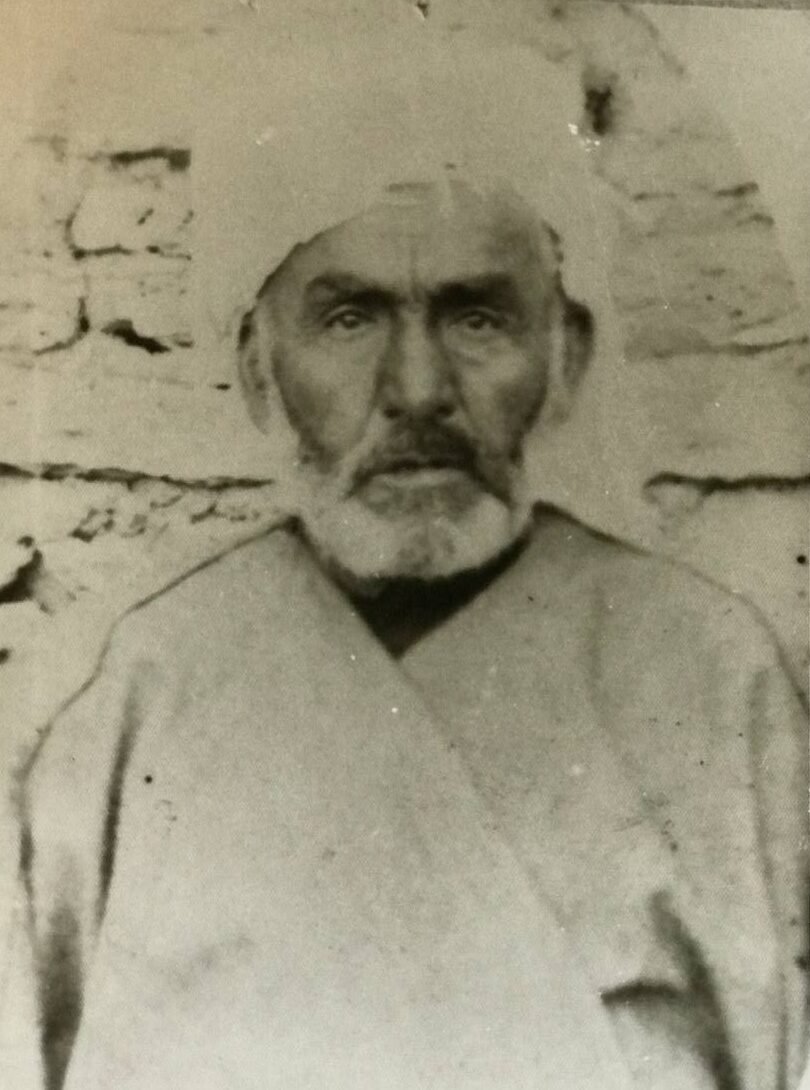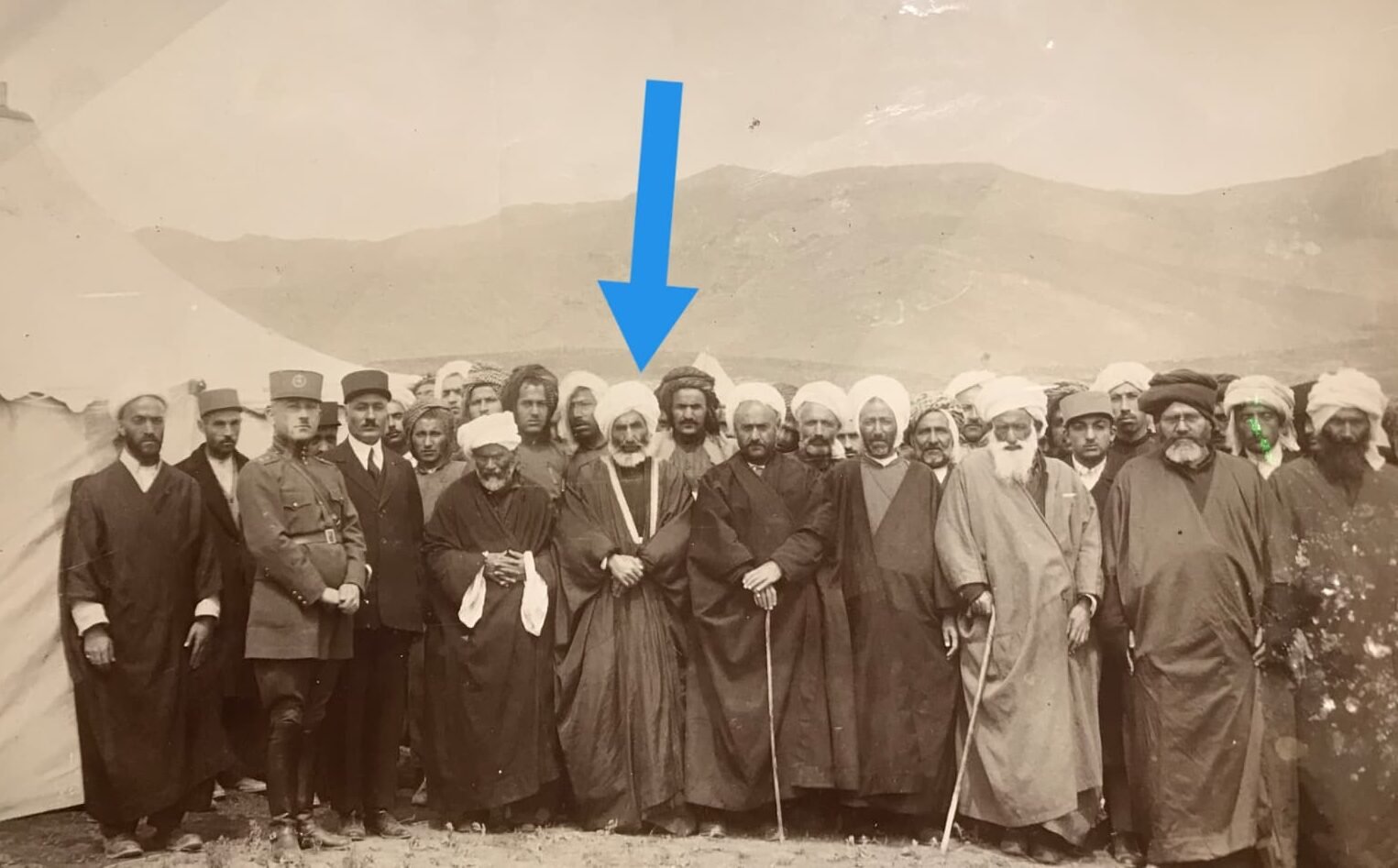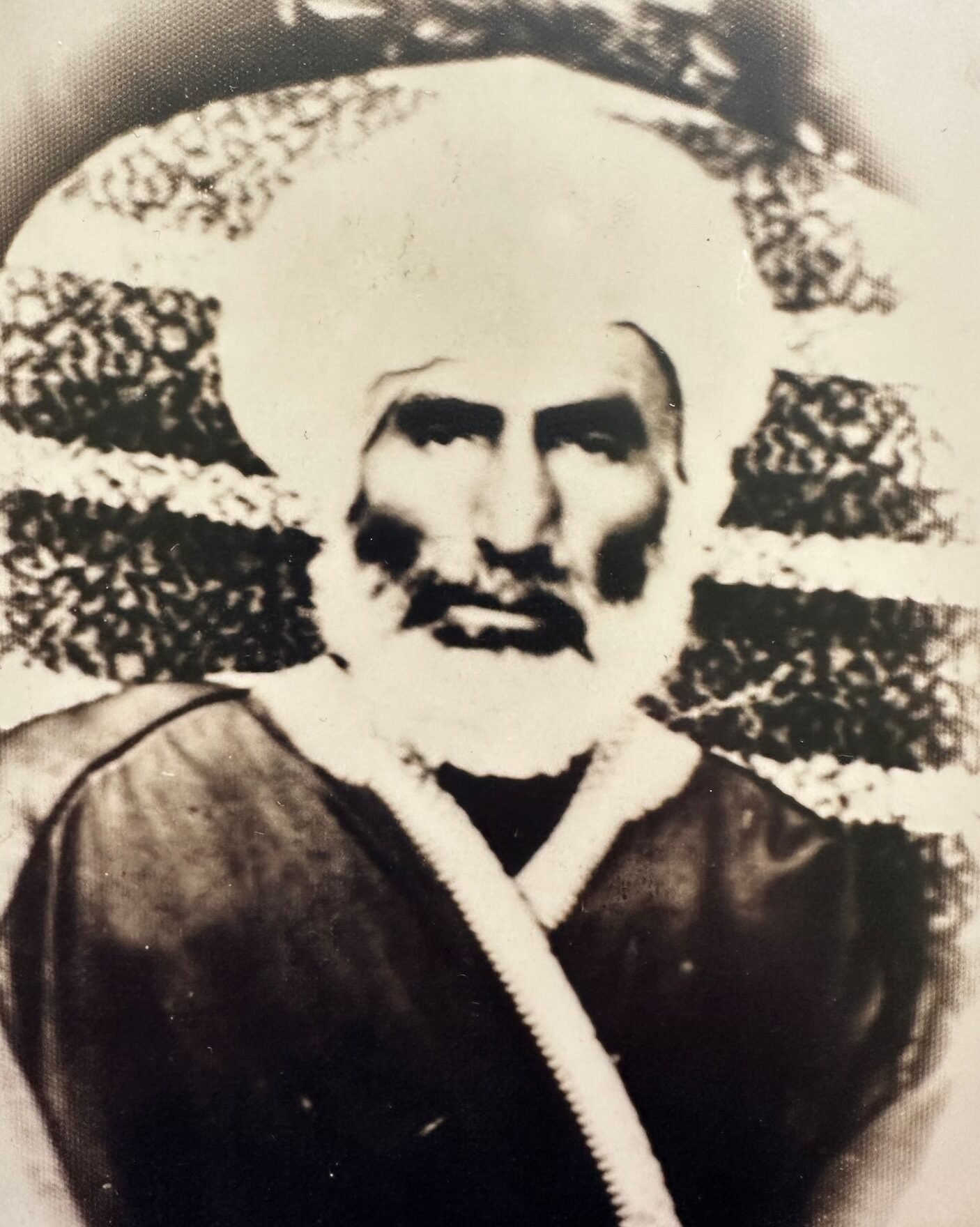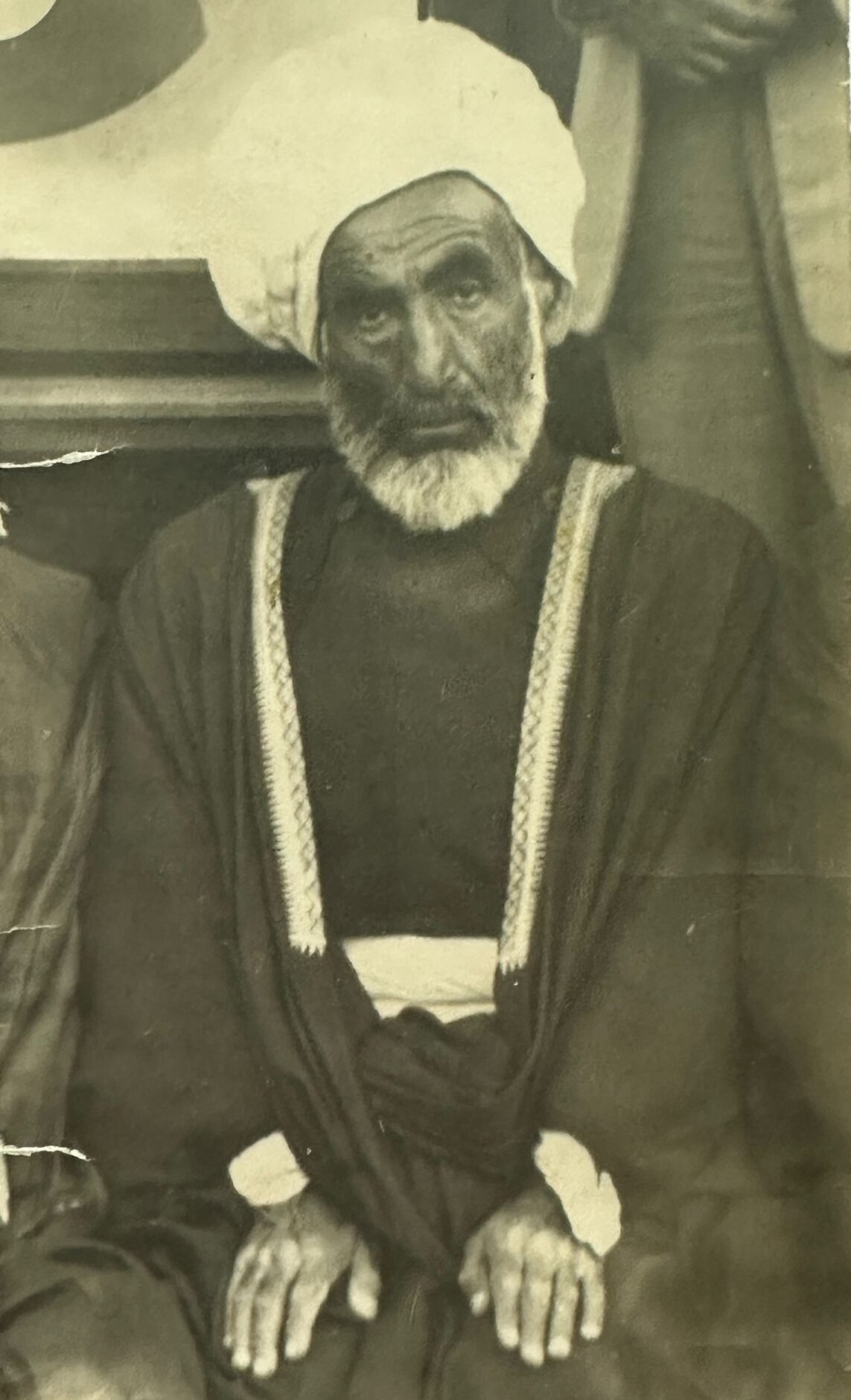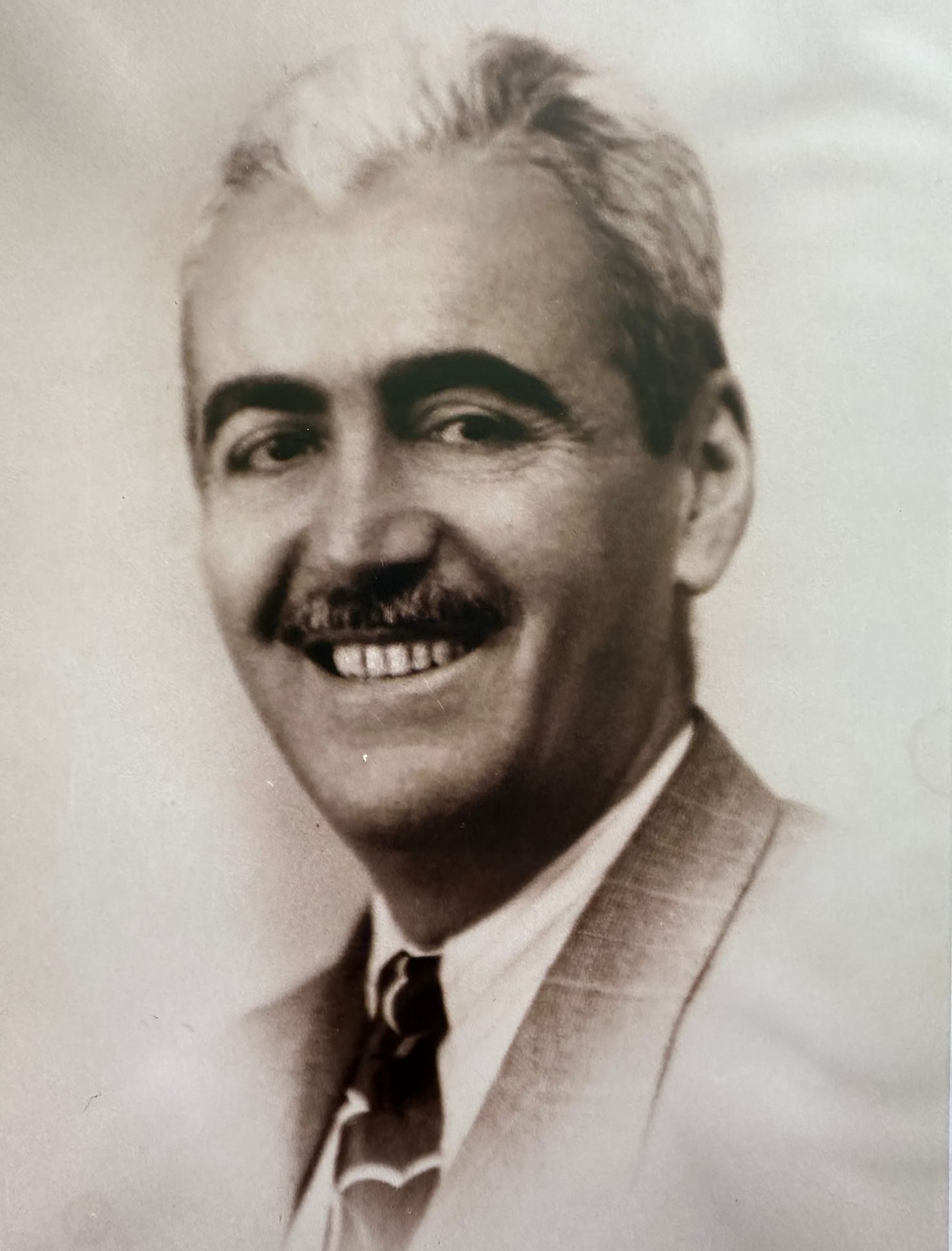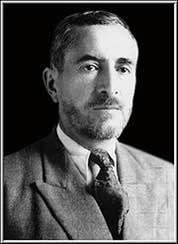
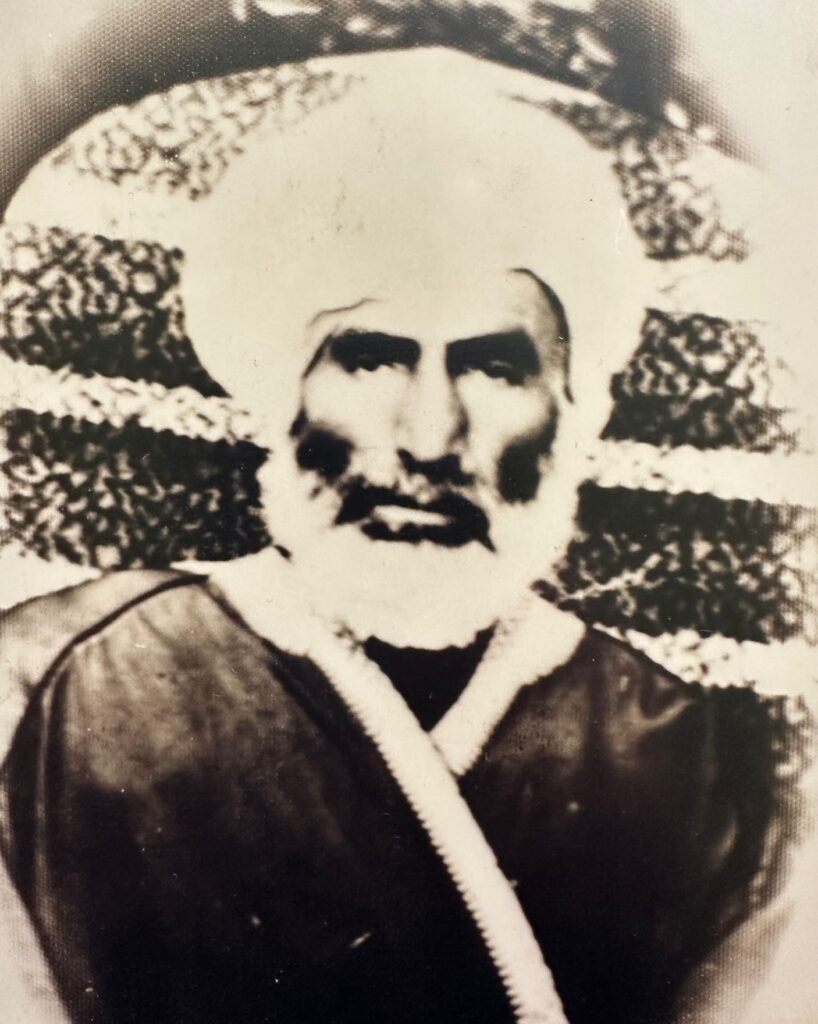
Qazi Ali was born in 1862 (1241 Solar Hijri) in the city of Mahabad. He was the son of Mirza Qasim Qazi and Amina Khanum Chawraqan. Mirza Qasim and Amina Khanum had four children: Ali, Askar, Abolhassan, and Piruza. Amina Khanum passed away at a young age, after which Mirza Qasim married Fatima Khanum, the daughter of Aminul Islam. Ali began his elementary education under his father, Mirza Qasim. He later moved to Sanandaj (Sena) to continue his studies, where he completed his religious education under the tutelage of Mullah Pir Baba, a prominent scholar of his time, and received his authorization (ijaza) to practice as a mullah. During his youth while studying in Sanandaj, he became classmates and close friends with Khalil Khan, son of Sherbeg, the leader of the Feyzollabegi tribe. Their friendship grew so strong that Khalil Khan wished to establish family ties between them and proposed that Ali marry his sister, Gewehertaj Khanum. In this way, Mullah Ali entered into married life with the daughter of Sherbeg Khan, who at that time resided in Soleimankand near Saqqez. Mullah Ali and Gewehertaj Khanum first had three children: Fatima, Mohammad, and Abolqasem, all of whom died in childhood. They later had four more children who survived: Khadija Khanum, Mohammad (the martyred Peshawa Qazi), Abolqasem (the martyred Sadri Qazi), and Amina Khanum. After completing his religious studies, Mullah Ali was recognized among the leading scholars of Kurdistan due to his knowledge and competence. In addition to expertise in Quranic interpretation (tafsir), syntax (saraf), and grammar (nahw), he was also exceptionally skilled in mathematics and calligraphy. He was known for his distinctive personality and high social standing. Following his father’s death, he became the Qazi (judge) of Mahabad and the Mukriyan region, and from then on he was known as Qazi Ali. His home was always a refuge for the needy and the poor. He helped the distressed and the less fortunate in every way he could, which earned him great love and respect within the community. Qazi Ali’s court was a place of justice where people’s disputes and problems were regularly resolved. He was renowned for his kindness, calmness, and generosity. He never lost his temper and never considered himself superior to others. After World War I, during the ensuing famine and hardship, Qazi Ali and his brothers—who owned villages, fields, and farmlands—divided the grain they had stored over several years in the villages of Piraweli Baghi and Guigjali into two parts. They sold one portion to the government at a high price and distributed the other portion for free among the poor and destitute. In doing so, they saved the lives of many people. This act further increased the affection and esteem in which Qazi Ali and his brothers were held by the public.
During the revolt of Ismail Agha Simko, Qazi Ali refused to join or support Simko’s movement. When Simko’s forces reached Mahabad and many gendarmes were killed, Simko ordered Qazi Ali’s execution. However, his men mistakenly killed Qazi Ali’s uncle, Qazi Latif, instead. They captured Qazi Ali, beat him on the head with rifle butts, causing him partial memory loss and severe hearing impairment. Simko later withdrew the execution order and released him. After parts of Mahabad’s homes and shops were looted by Simko’s forces, the injured Qazi Ali, with his head bandaged, went to Simko and requested that the looted belongings of the people be returned so that the residents would not fall into poverty. At that moment, one of Simko’s men entered and said, “Your Excellency, we have killed Qazi Ali as per your order.” Simko replied, “You fool! Qazi Ali is sitting right here. Whose soul have you mistakenly taken in his place?” After World War I and the martyrdom of Qazi Fattah and his companions, Qazi Ali was not spared from the Russians’ actions either. His house was set on fire, and he was dragged to Urmia Prison. He was released after some time, but upon returning to Mahabad, he was arrested again and imprisoned for a period in Haidarabad Prison. Due to the blows he had received from the Cossacks and the repeated imprisonments and tortures by the Russians, Qazi Ali suffered from weakness and frailty in the final years of his life. His eldest son, Peshawa Qazi Mohammad, carefully oversaw his father’s affairs and worked hard to ensure that his illness and weakness did not affect the fairness of his rulings, maintaining justice in the court. Qazi Ali passed away in 1931 (1310 Solar Hijri). A three-day public mourning period was declared in Mahabad and Mukriyan, during which shops and the bazaar were closed. After his death, the religious leaders and scholars of the region entrusted the responsibility of the court to Qazi Mohammad, asking him to take his father’s place and assume judicial authority over the region.
Sources: Rozgari Win Bu (The Vanished Days – Memoirs of Rahman Qazi) General History of the Democratic Party of Kurdistan (by Qasim Qazi) Along with the Passage of Time (by Ahmad Qazi) A Brief History of the Qazi Family (by Khalil Fattahi Qazi) Azadi ya Dar (Freedom or Gallows – by Mohammad Reza Seif Qazi)
Compiled by: Dr. Ahmad Fattahi Qazi Edited by: Nasir Qazi