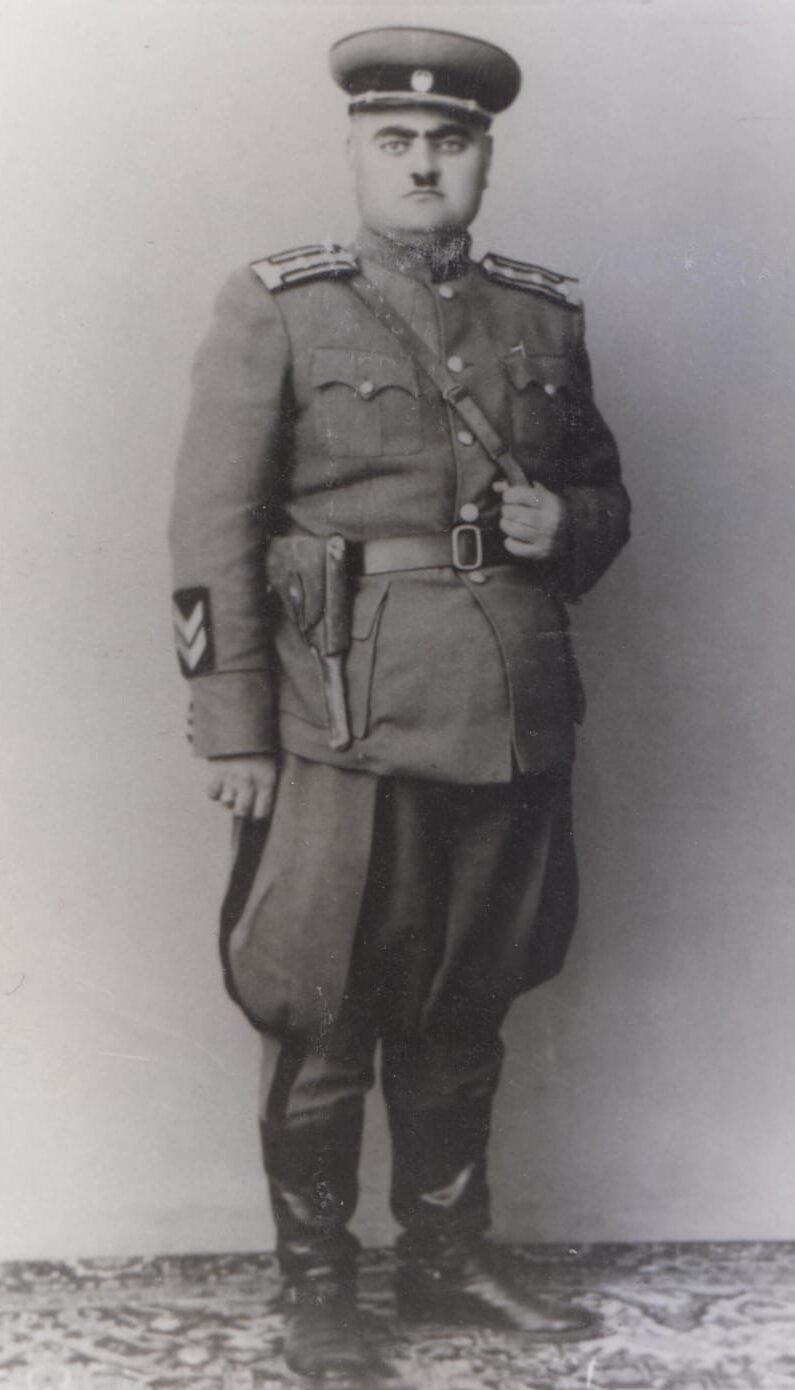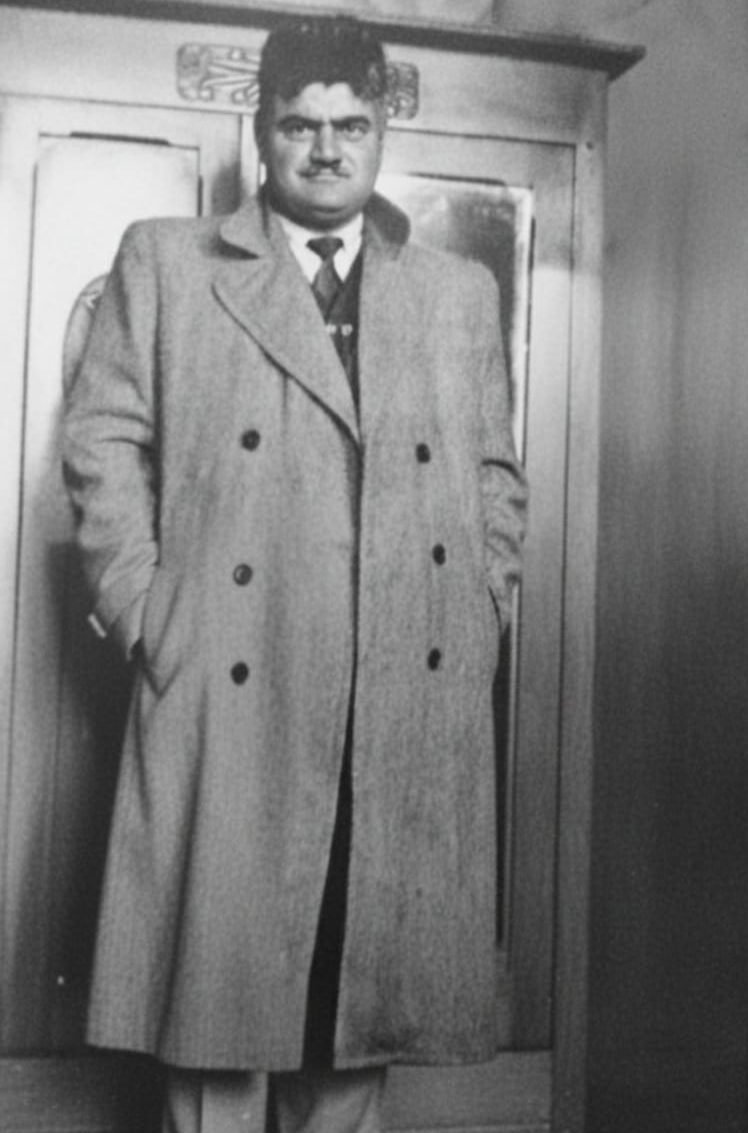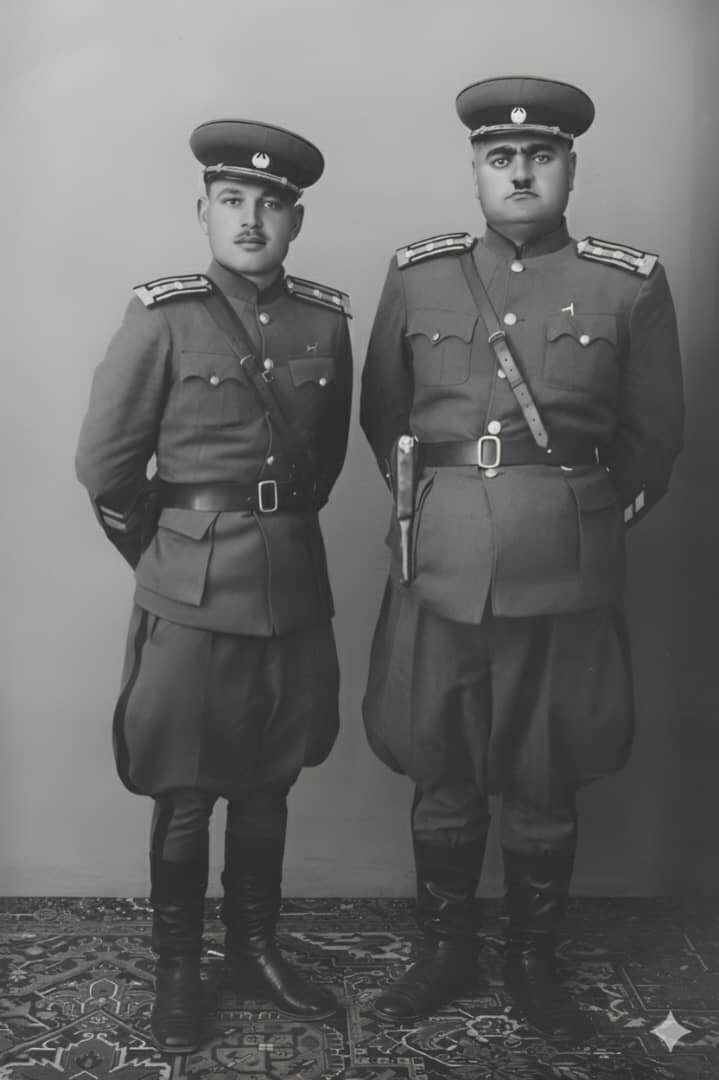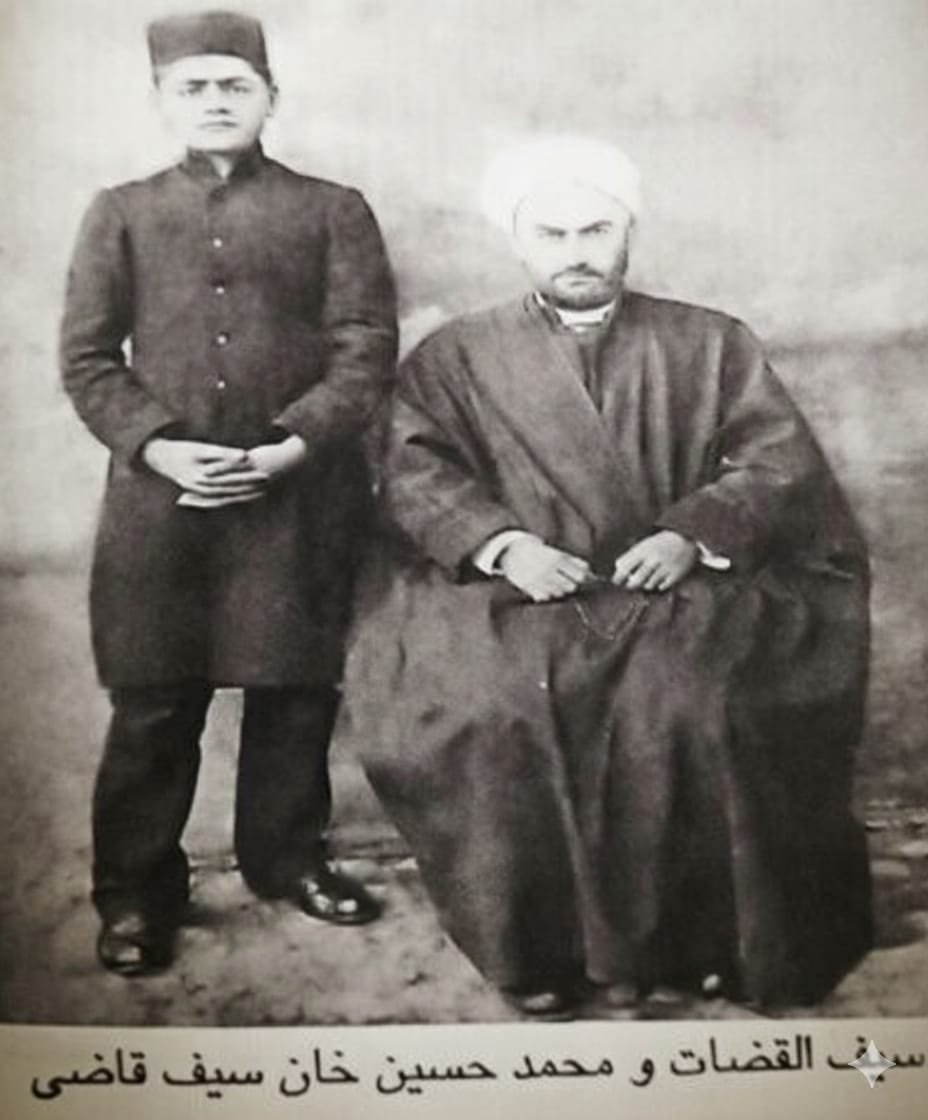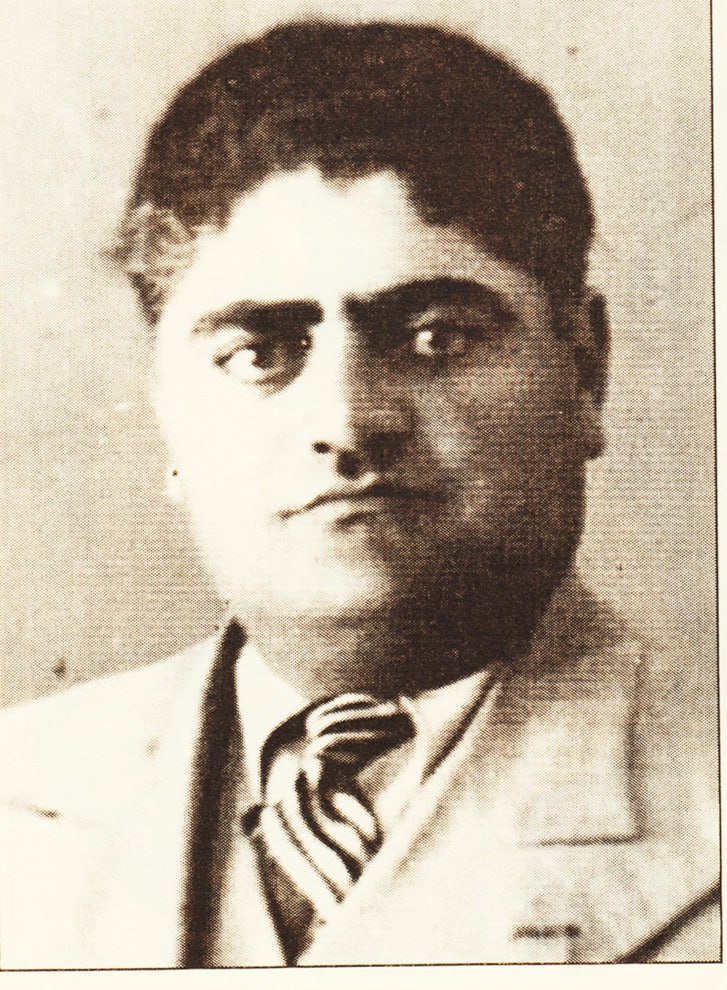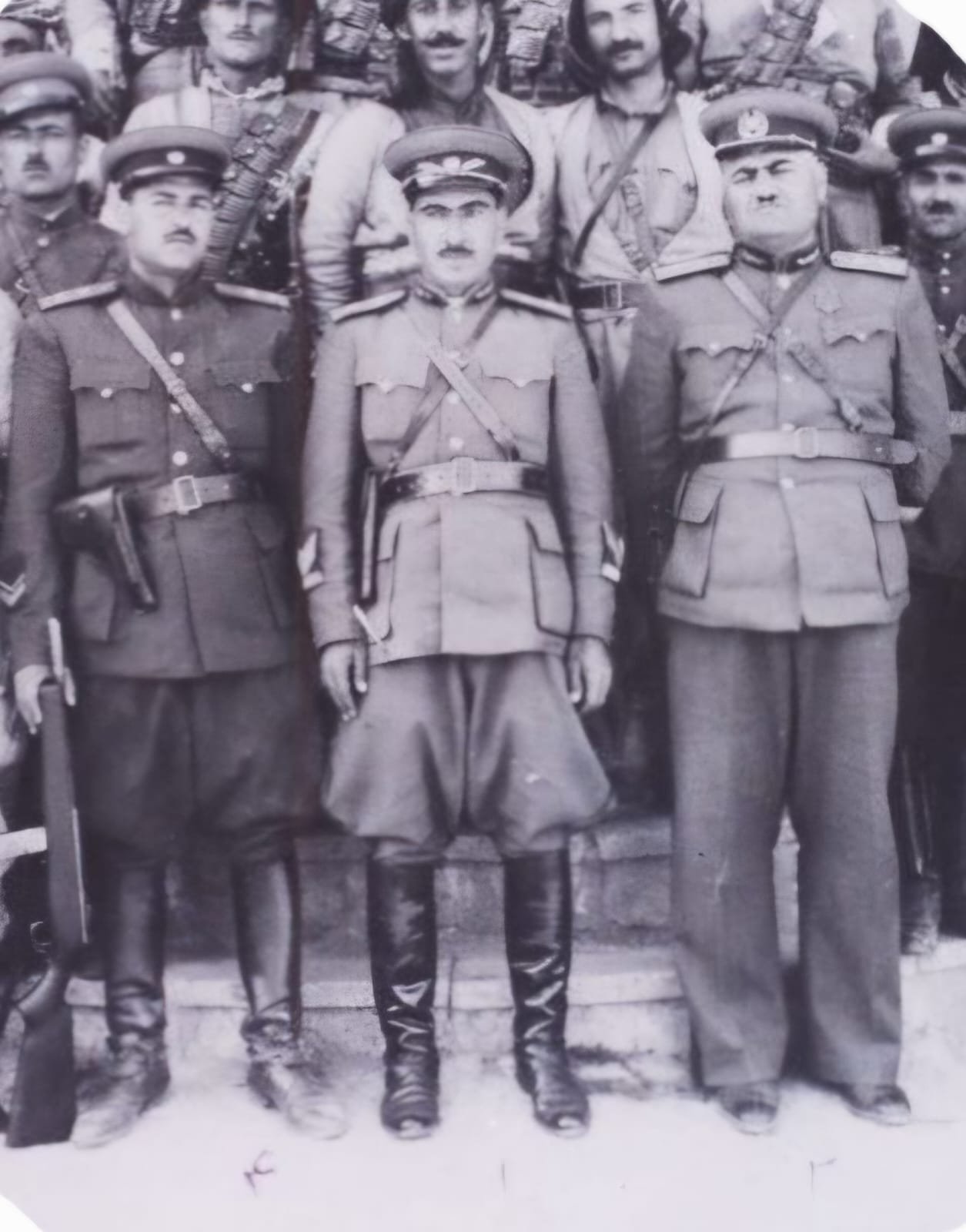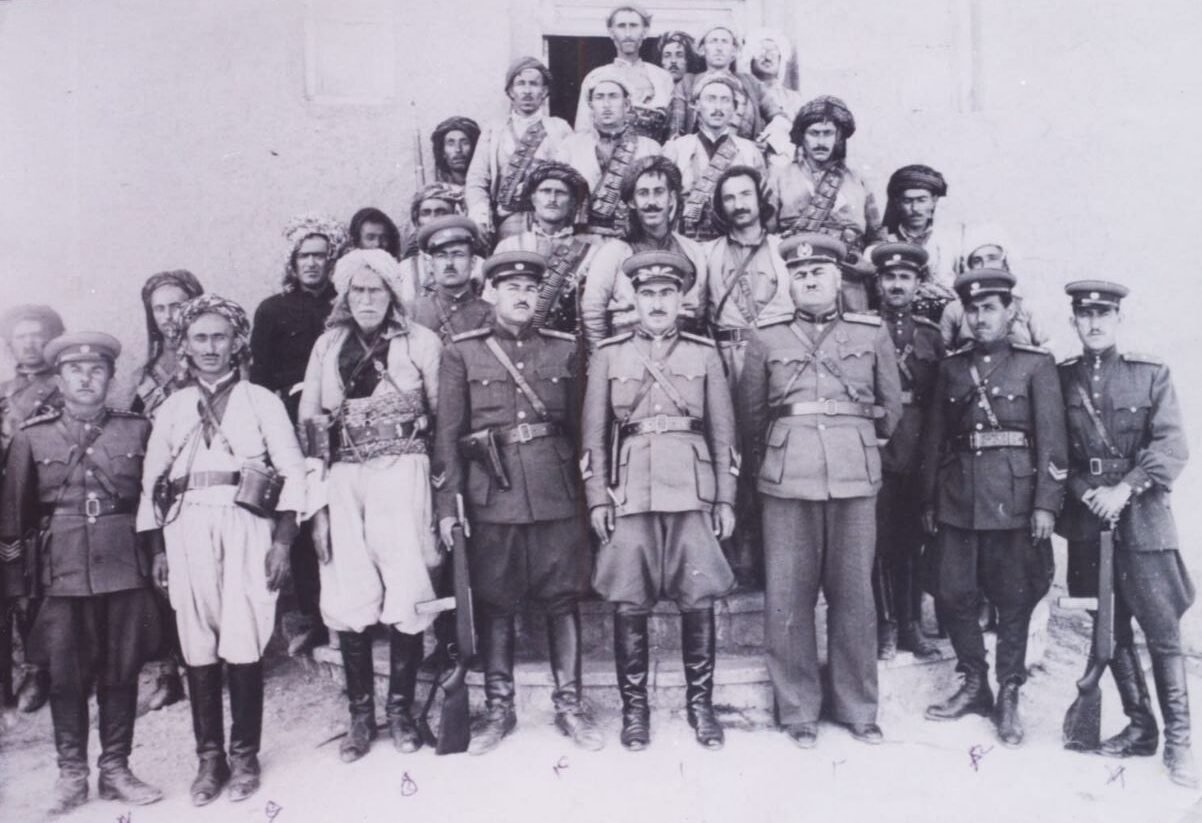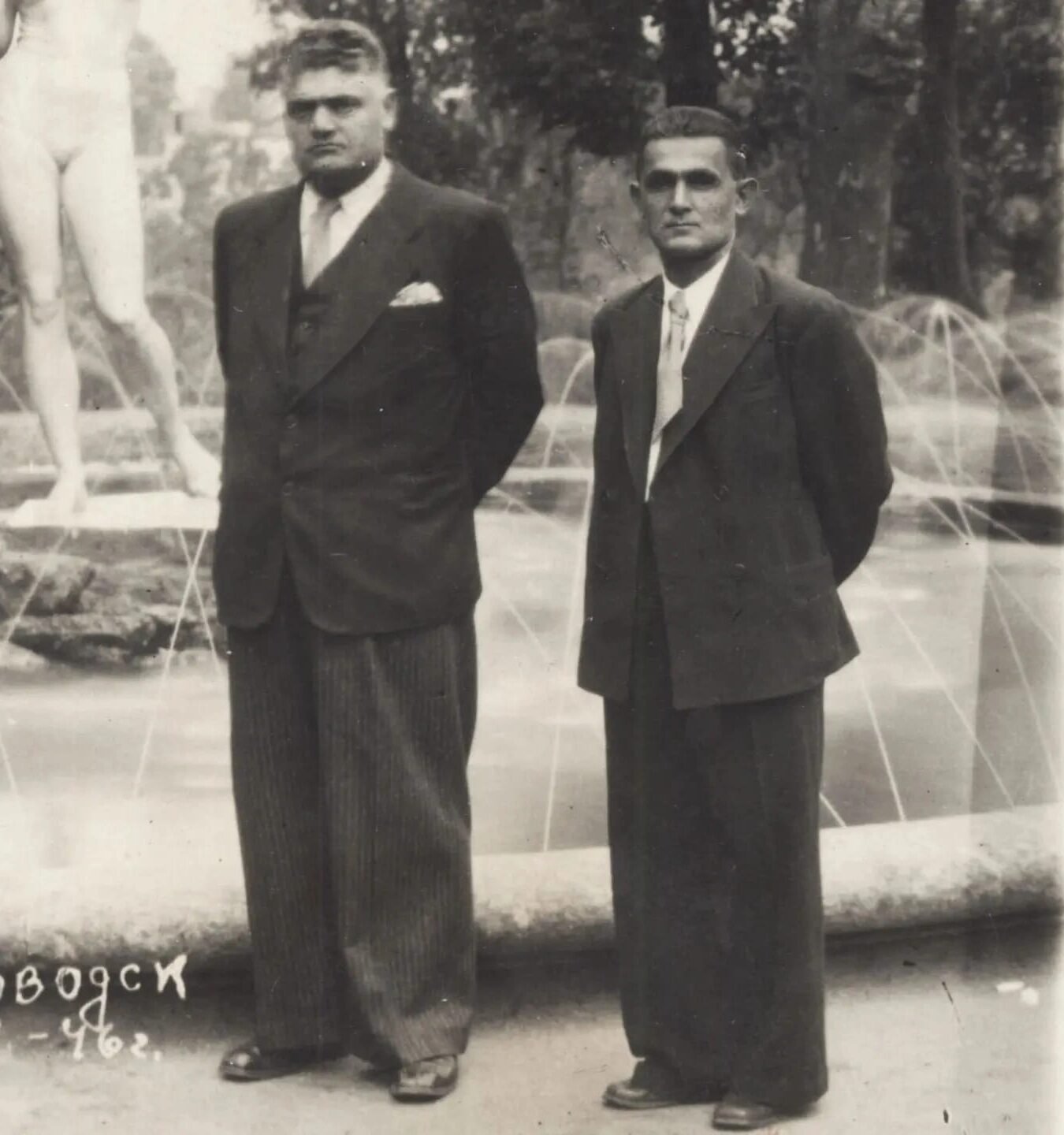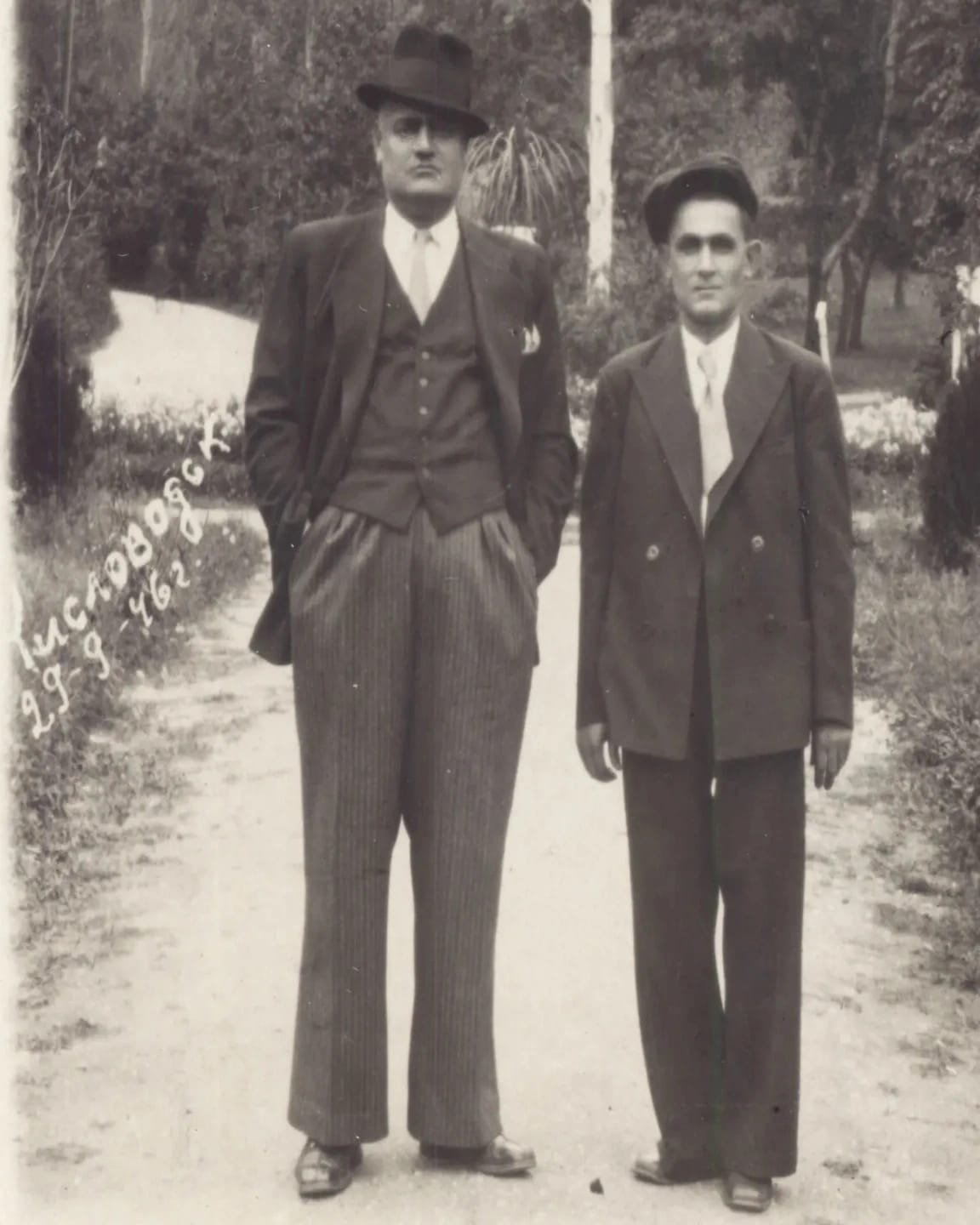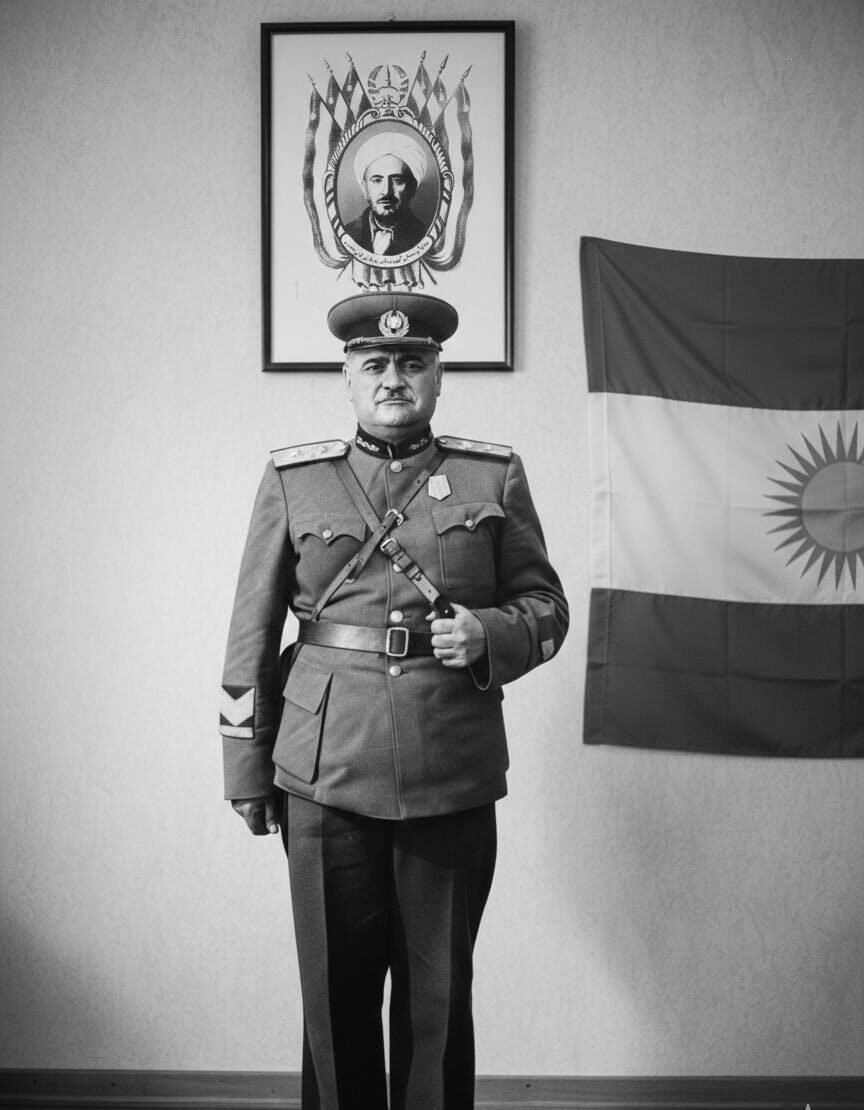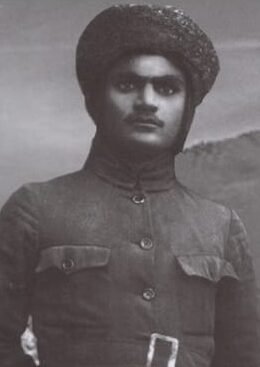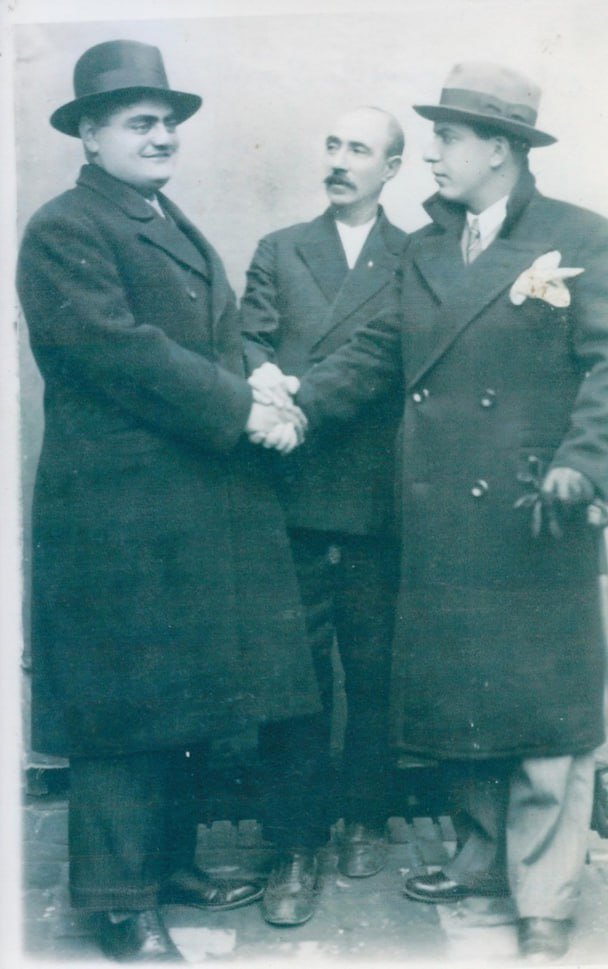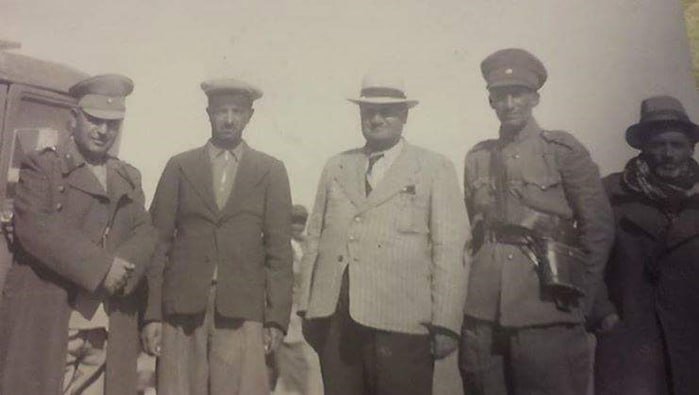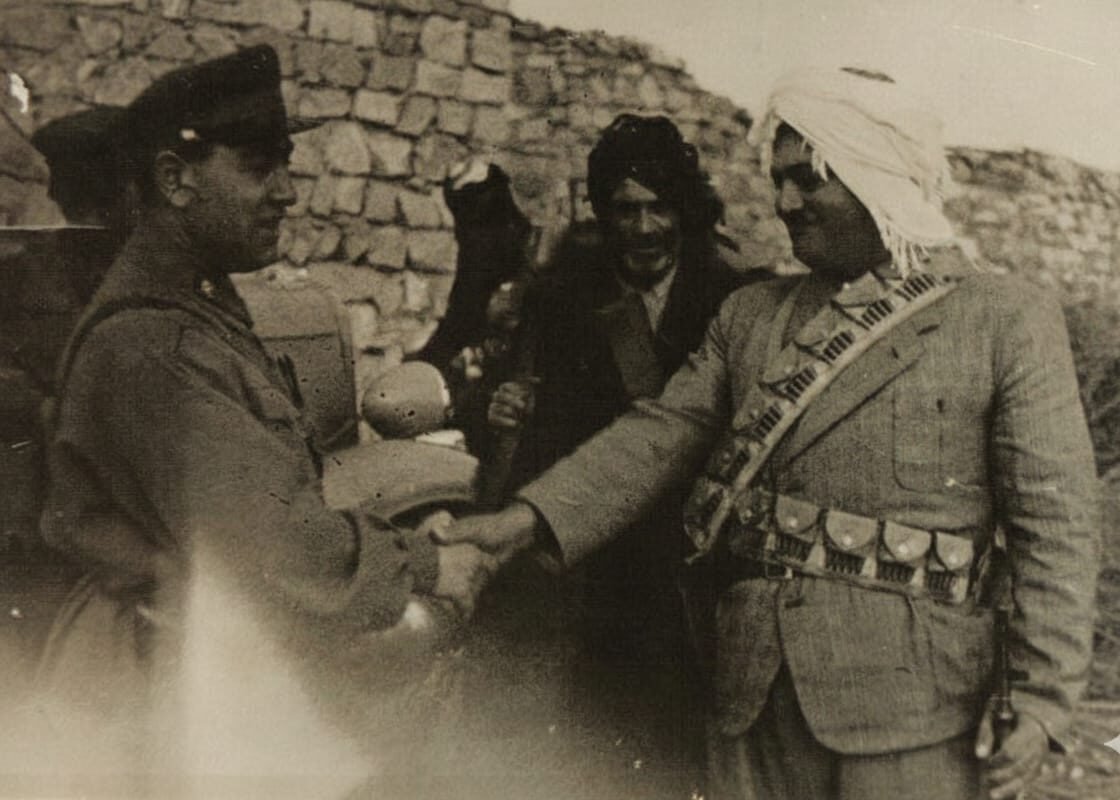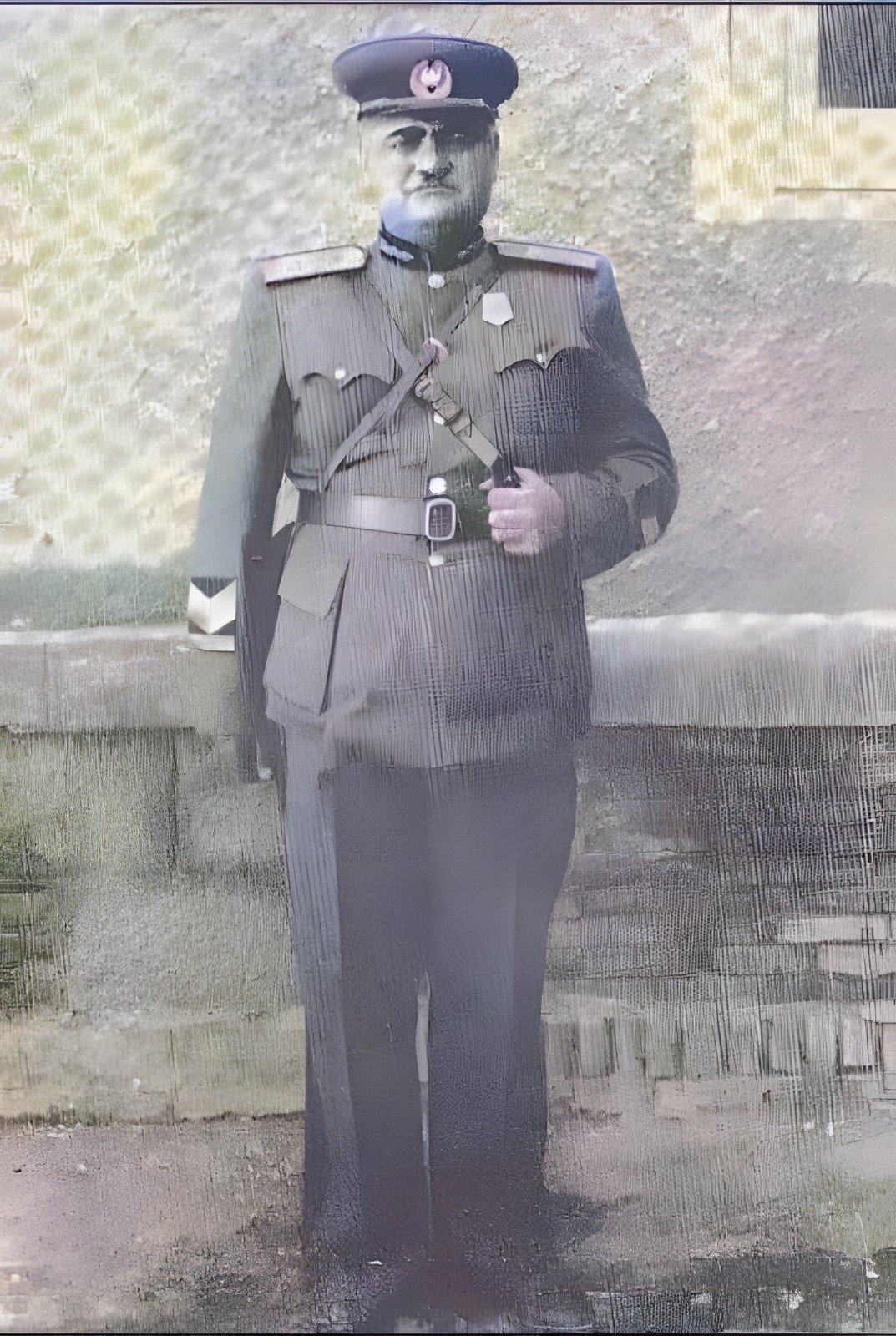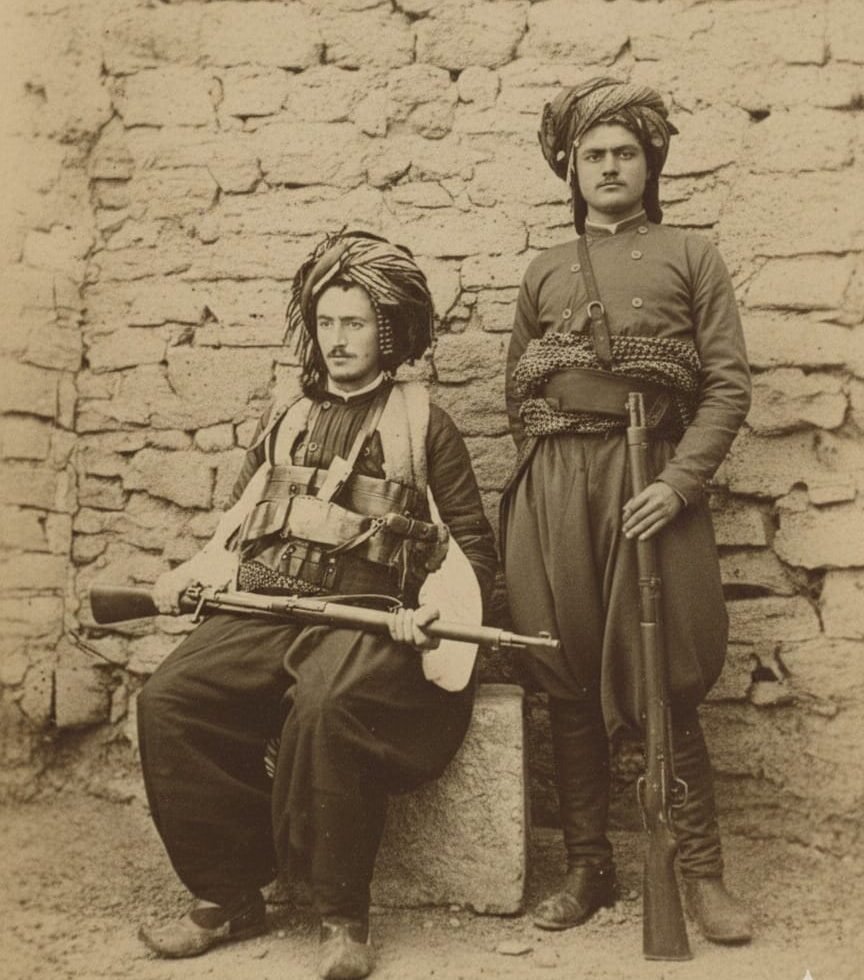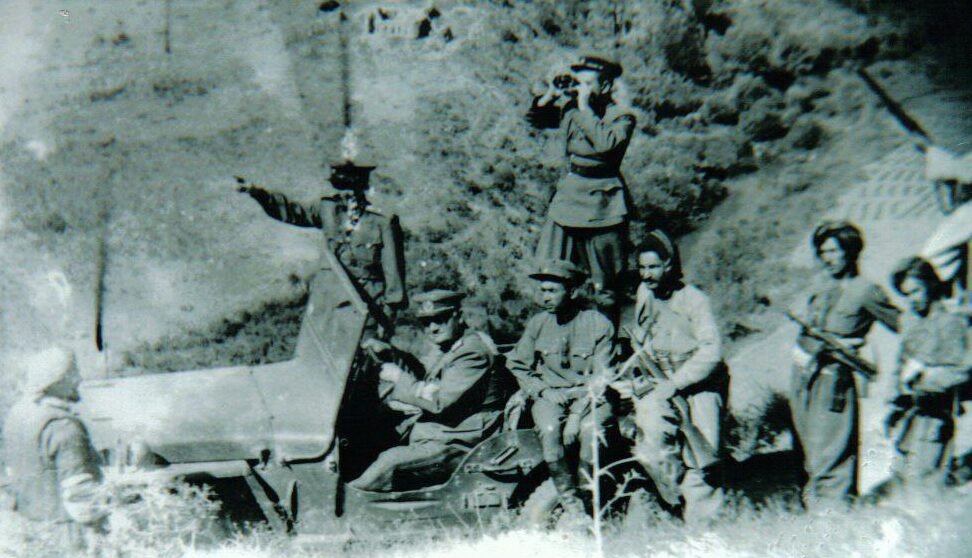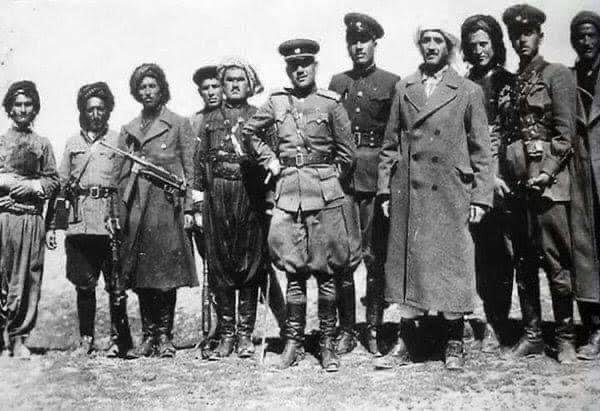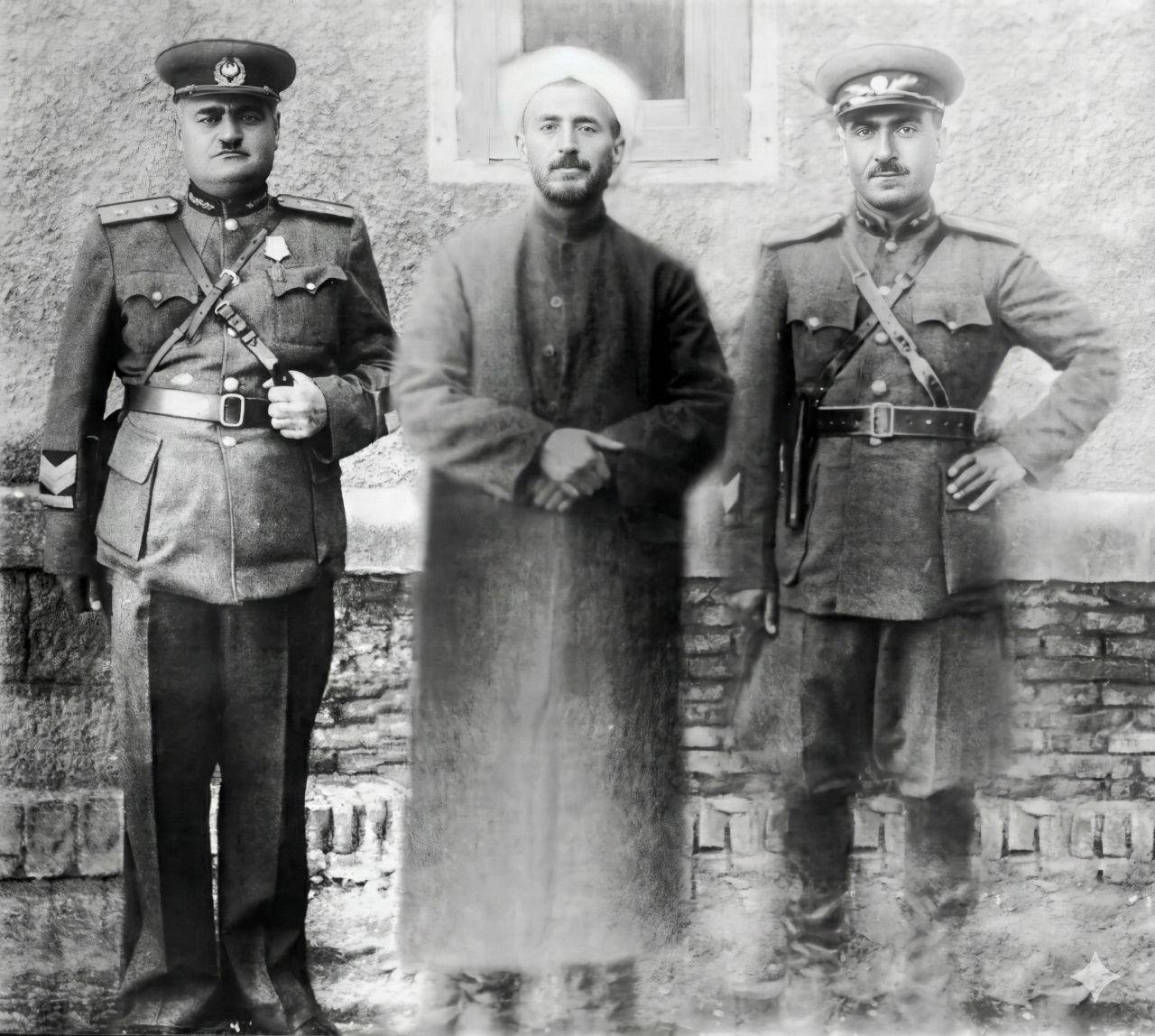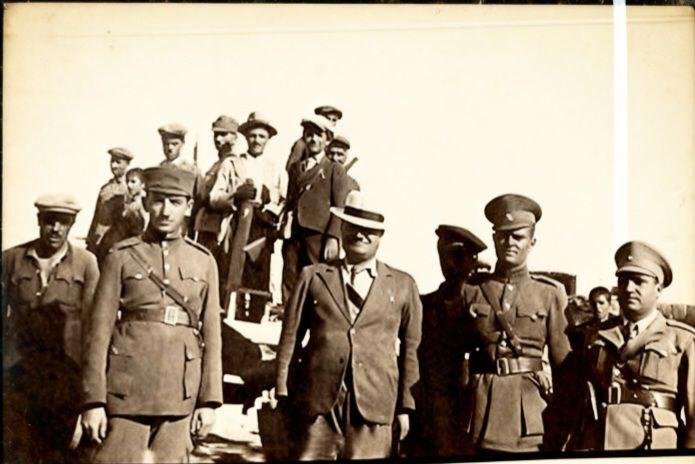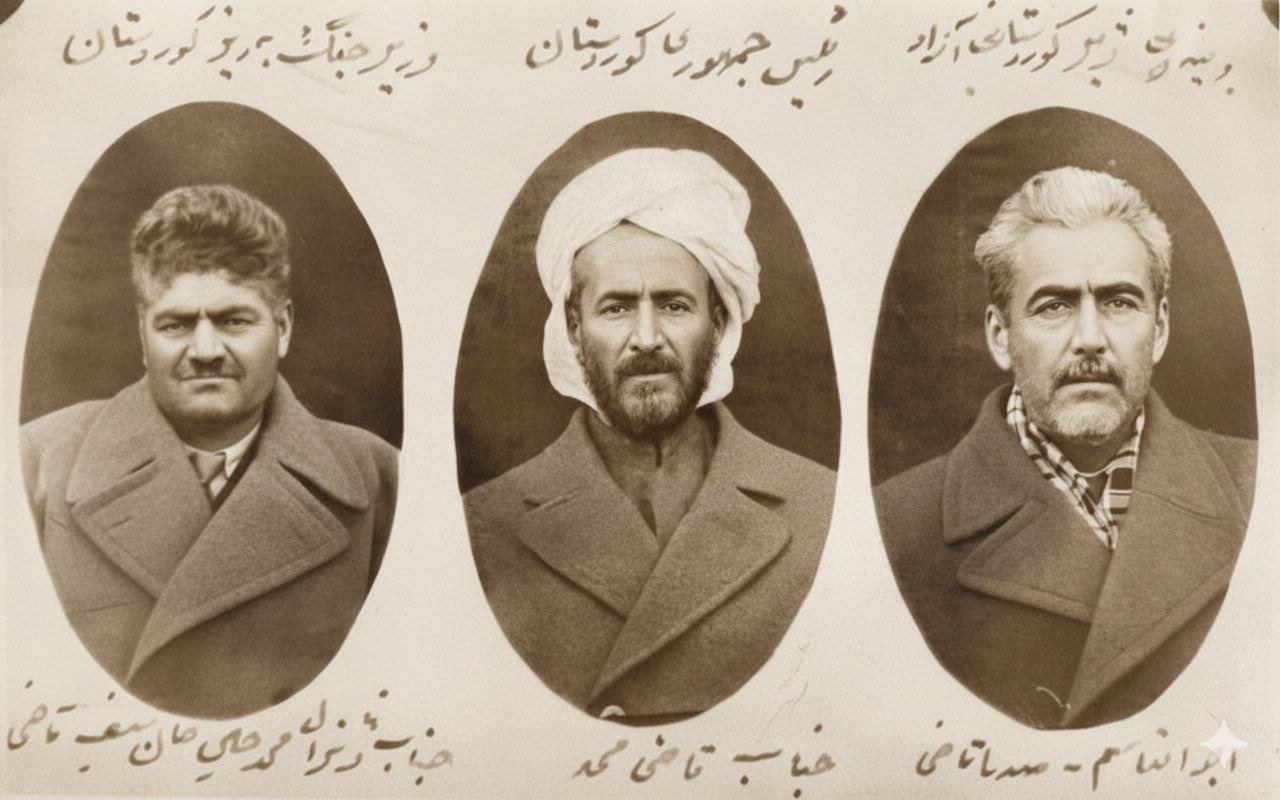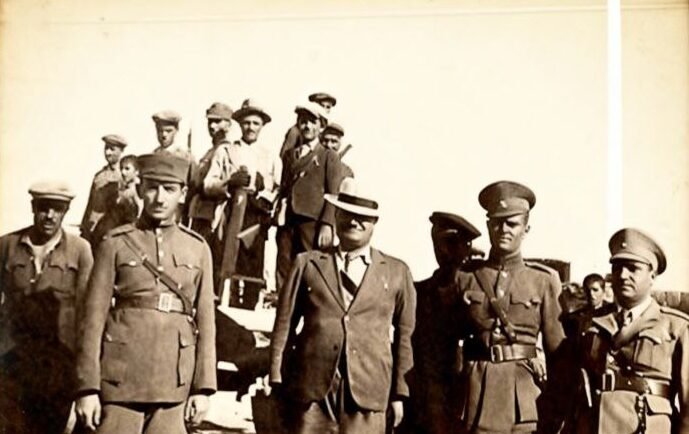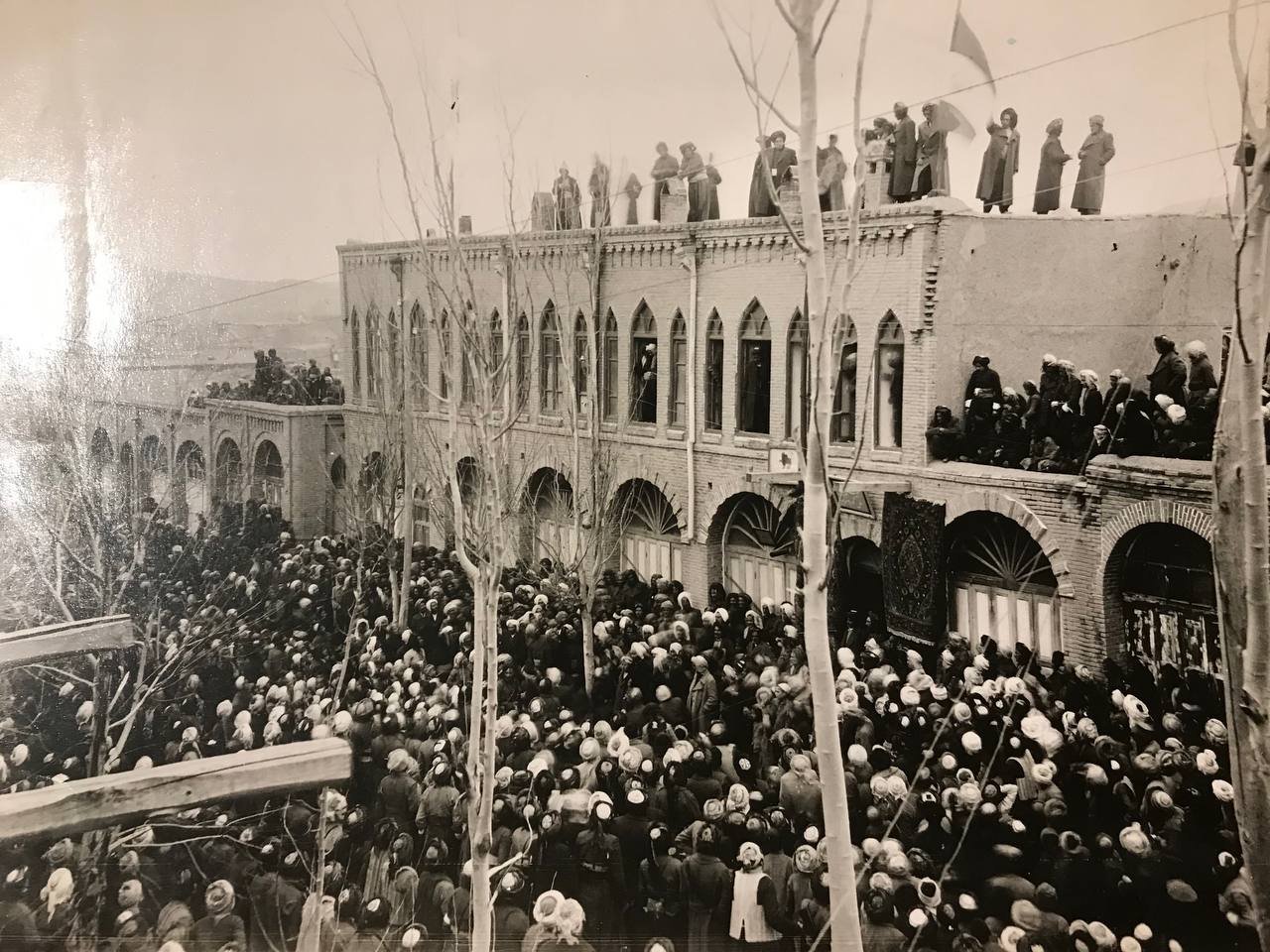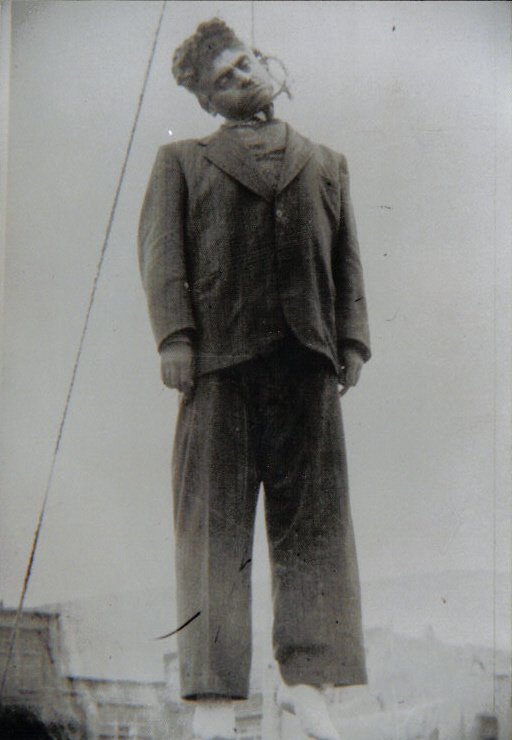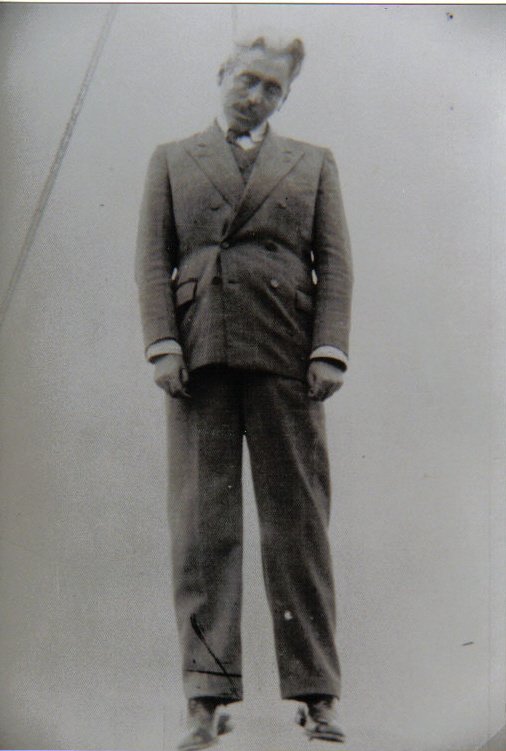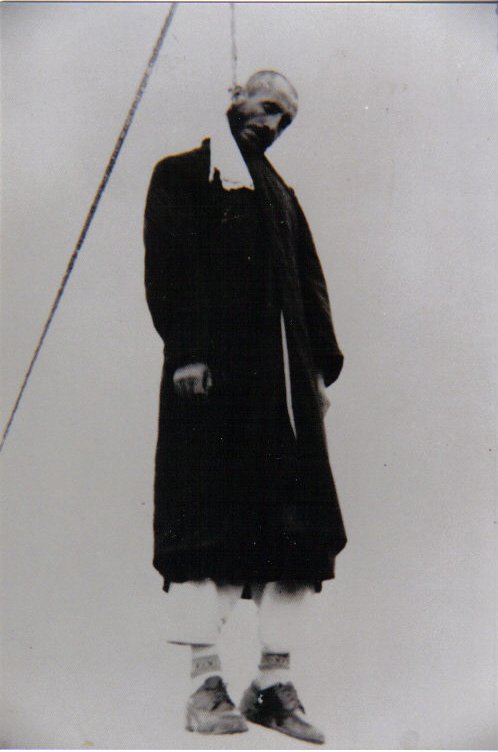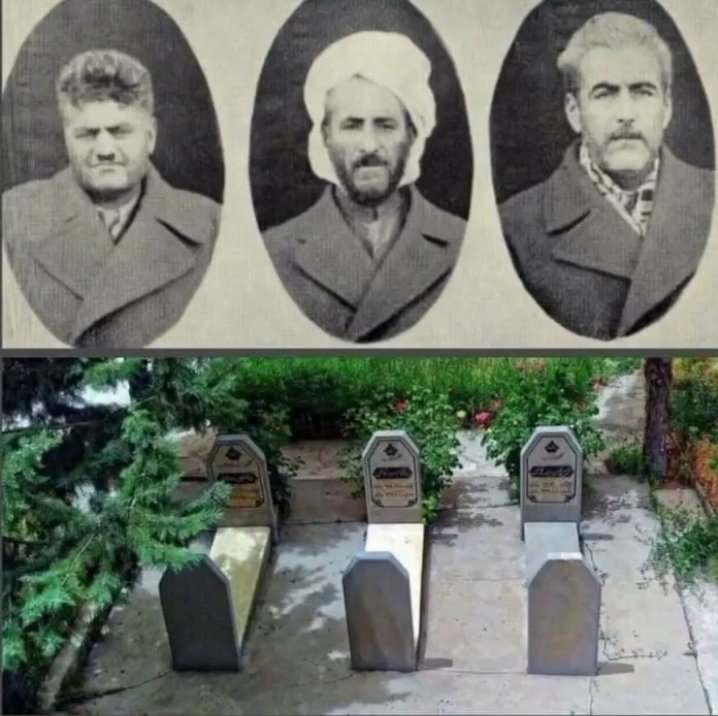


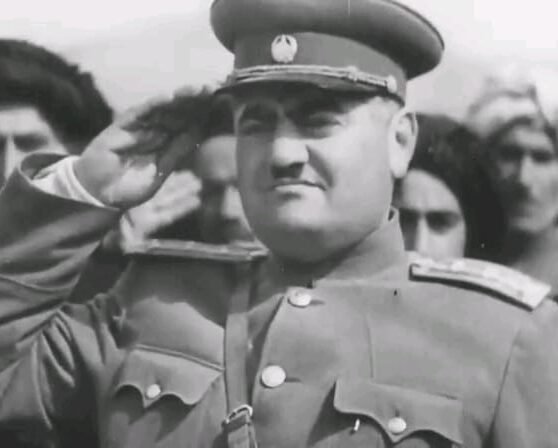
Mohammad Hossein Khan was born on the 9th of Banamehr (June) 1283 Solar Hijri (1904 CE) in the city of Mahabad. His father was Mirza Abolhassan Seifi Qazi, known as Seifolghozat, a poet, writer, intellectual, and prominent Kurdish figure. His mother was Zobeydeh Khanom, daughter of Sherbeg Khan of Feyzollabegi and sister of Gawehertaj Khanom (mother of the Peshwa/Qazi Mohammad). Thus, Mohammad Hossein Khan was both a cousin and nephew of the Peshwa. Early Life and Education From the age of six, under his father’s supervision, he began studying the Quran, Saadi’s Gulistan and Bustan, calligraphy, and the Kurdish language. He spent some time at the Sharafkand khanaqah with Sheikh Burhan and later completed his religious studies with Molla Mohammad. Due to the constant flow of writers, scholars, officials, and intellectuals visiting his father’s house, the family home functioned like a contemporary university. The young Mohammad Hossein greatly benefited from these gatherings, asking questions and learning daily. This environment not only elevated his scholarly and literary knowledge but also taught him the manners, social conduct, and political insights of the great men of his time. After completing his primary and religious education, he moved to Urmia for further studies and graduated with top honors. He then continued his education at the American Memorial School in Tabriz, where instruction was in English. In addition to English, Russian, and French, he studied economics, commerce, international relations and politics, philosophy, mathematics, algebra, physics, chemistry, and astronomy. These subjects significantly advanced his modern scientific knowledge and gave him exceptional expertise in commerce, economics, diplomacy, and military science. After receiving his diploma from the Memorial School, he was admitted to the Tabriz Military Academy. He studied for two years in the specialized program and earned the rank of officer. Thanks to this diverse education and his interactions with leading professors and scholars, Mohammad Hossein Khan became fluent and proficient in Persian, Arabic, Turkish, French, English, and Russian, in addition to his native Kurdish. Manaf Karimi, Minister of Education of the Republic of Kurdistan, said in a television interview: “When we first went to meet the Russian delegation in Tabriz, Mohammad Hossein Khan spoke fluently and eloquently in Russian with the delegation, astonishing everyone with his proficiency.” Family Life Mohammad Hossein Khan married twice. His first marriage was to Afsar Khanom, daughter of Mirza Hashem Kalantar (a close friend of Sheikh Mohammad Khiabani). She passed away shortly after due to illness. His second marriage was to Farrokhloqa Malek Qasemi, daughter of Imam Qoli Mirza. She was of royal Qajar descent, a descendant of Fath-Ali Shah Qajar, and known as “Shazdeh” (Princess). They had six children: Fattah Khan, Mohammad Reza (known as Reza Khan, who died at the age of 14 due to illness), Ali Khan, Zeynab (known as Malus Khanom), Fayeqeh Khanom, and Mahmoud Agha. When the youngest child, Mahmoud, was born, Mohammad Hossein Khan was in prison. The family brought the newborn for a final visit, and it was there in prison that he named his son Mahmoud—the only time father and son ever saw each other. Wealth and Social Role Using the knowledge of commerce and economics he had gained at the American Memorial School, Mohammad Hossein Khan became one of the most prominent capitalists and landowners in Kurdistan. This wealth enabled him to spend several million tomans through the Republic of Kurdistan without causing any serious hardship to himself or his family. Before 1320 Solar Hijri (1941), he was awarded the honorary rank of Colonel by the central government and appointed as security chief for the region between Miandoab and Maragheh. During this period, he restored security to the area by capturing the notorious local rebel Faramarz Khan Esfandiari and his gang. In 1322 Solar Hijri (1943), at the recommendation of Qazi Mohammad (the Peshwa), he became a member of the Komala Zhian Kord (Kurdish Revival Society). Due to his political acumen, social stature, and financial capabilities, he played a highly influential role in the organization. In Shahrivar 1324 Solar Hijri (August/September 1945), he was one of the founders of the Kurdistan Democratic Party and took responsibility for the party’s finances. This continued during the Republic of Kurdistan, where a large portion of the Peshmerga salaries and expenses were covered by his personal wealth. In addition, he successfully worked on organizing and unifying the tribal leaders of the region. During the Republic of Kurdistan, he was appointed Minister of War and Deputy to the President of the Republic. He was also assigned as the representative of the Republic of Kurdistan to the National Assembly of the Azerbaijan Republic. Contemporary Accounts of His Role Najaf Qoli Pasian wrote in his book: “On the second day of Bahman, after Qazi Mohammad declared the Republic of Kurdistan, Mohammad Hossein Khan, dressed in military uniform, delivered a speech in which he named Qazi Mohammad as the leader of the Kurdish nation and President of the Republic of Kurdistan.” Master Hejar in Chishti Majour describes him as: “A tall, broad-shouldered, dignified, and extremely patriotic Kurd. A brave and fearless man, which is why he was made commander of the Peshmerga forces.” The Iranian Army newspaper Atesh wrote: “Mohammad Hossein Khan was a unique individual; no one could match him in bravery. At the gallows, even after the rope broke around his neck, he continued shouting loudly ‘Long live the Kurds and Kurdistan!’ and was hanged a second time.” Rahman Halavi in From Mahabad to Baikonur writes: “Mohammad Hossein Khan was an exceptionally dignified and courageous man. I pray for mercy and blessings upon his pure soul.” The book Azadiq Yolunda Mübariza (published in Baku by the Communist Party) describes him as: “A brave and fearless commander who spoke Russian well. He mounted an unparalleled defense in court and went to the gallows with such fearlessness and dignity that it borders on legend.” Hashim Salimi in Panja Mor notes that Mohammad Hossein Khan was a highly educated and knowledgeable man whose qualities distinguished him from his contemporaries. His studies at famous schools and colleges, along with mastery of several foreign languages, enabled him to maintain warm friendships with many intellectuals and figures of the era, including Ahmad Kasravi, Hassan Taghizadeh, Ali Akbar Siyasi, Mirza Hassan Roshdieh, and Master Parvari. He played a decisive and pivotal role in founding the Kurdistan Democratic Party and establishing the Republic of Kurdistan. He also served as a key bridge between Iranian intellectuals of the time and Kurdish leaders and writers. For example, he invited the renowned Iranian writer and scholar Ahmad Kasravi to his village of Sarav (his personal property), hosted him generously, and then introduced him to Qazi Mohammad and other Kurdish intellectuals in Mahabad. After the negotiations between the Peshwa and Qavam-os-Saltaneh in Shahrivar 1325 Solar Hijri (1946), Mohammad Hossein Khan was officially appointed Governor of Mahabad by Mozaffar Firouz, Deputy Prime Minister. However, this did not last long. When the central government’s military forces attacked Kurdistan, he played a major role in the defense and resistance of the Peshmerga forces in the battles of Saqqez and Miandoab. In Azar 1325 Solar Hijri (December 1946), after government forces entered Mahabad, Mohammad Hossein Khan, along with the Peshwa and other leaders of the Republic, was arrested. During the trial, he mounted a powerful defense of himself and the Republic. Ultimately, he was sentenced to death. One hundred days after their arrest, on the night of the 10th of Khordad 1326 Solar Hijri (March 31, 1947), Mohammad Hossein Khan was executed by hanging alongside Qazi Mohammad and Sadr-e Qazi by the forces of the Iranian Shah’s government. He became one of the brightest stars in the history of the Kurdish people’s liberation struggle. The story of his execution is both a human tragedy and a legend. After the Peshwa was hanged, Mohammad Hossein Khan was brought to the gallows. Upon seeing the Peshwa’s body, he broke free despite his bound hands, attacked two officers, and shouted curses at them. Several men were needed to restrain him. When they finally hanged him, the rope broke and he fell. Even then, he shouted loudly, “Long live the Kurds and Kurdistan!” Although hanging a person a second time after the rope breaks is illegal, they raised him again and executed him for the second time. This clearly shows the deep fear the state had of his powerful personality and their determination to eliminate him by any means.
Sources The book Azadi ya Dar (Freedom or the Gallows) by Mohammad Reza Seifi Qazi Nahini Dadgahi Kardani Qazi Mohammad va Hamrahani (The Secrets of the Trial of Qazi Mohammad and His Companions) by Mohammad Reza Seifi Qazi Compiled by: Mohammad Reza Seifi Qazi Edited by: Nasir Qazi