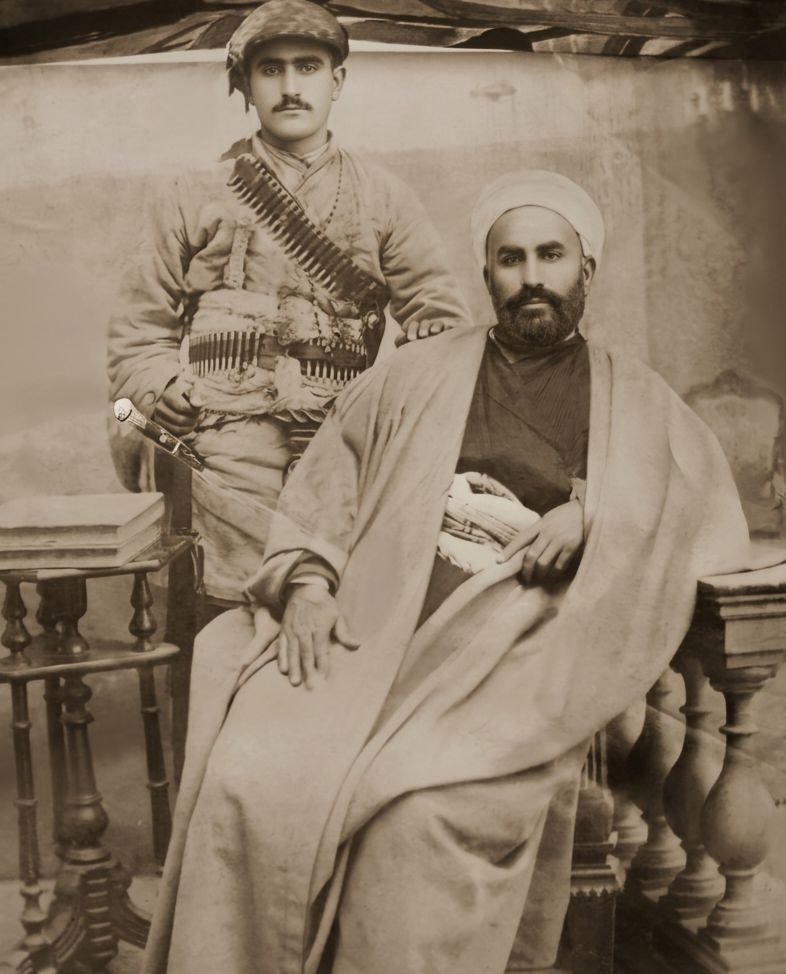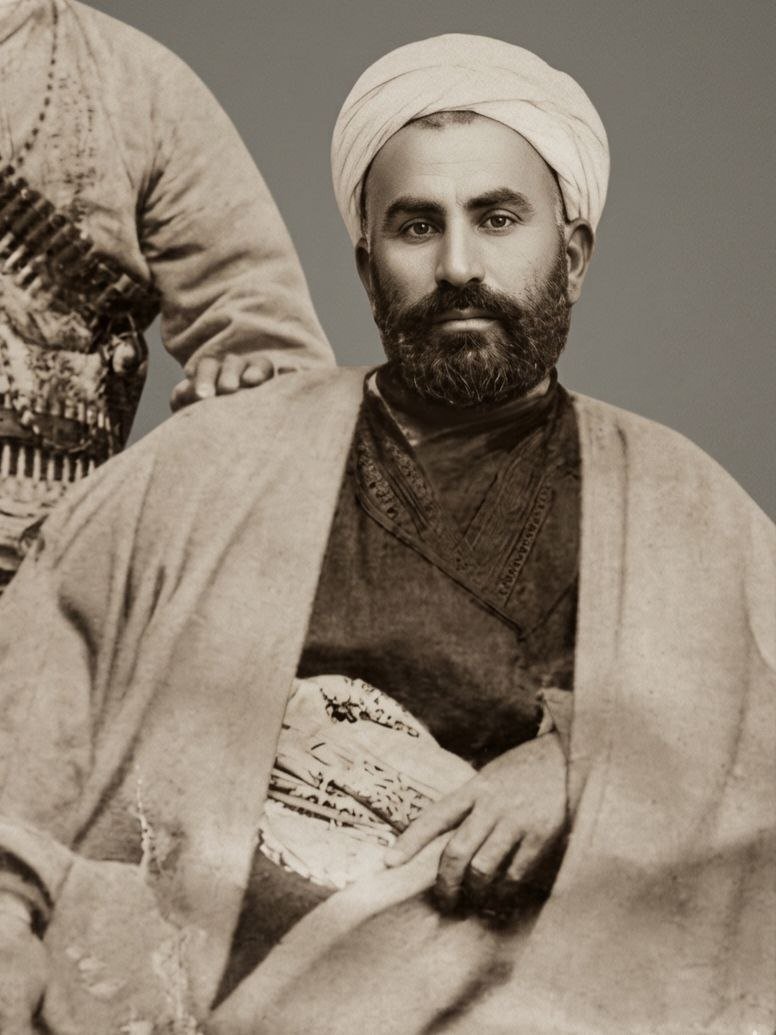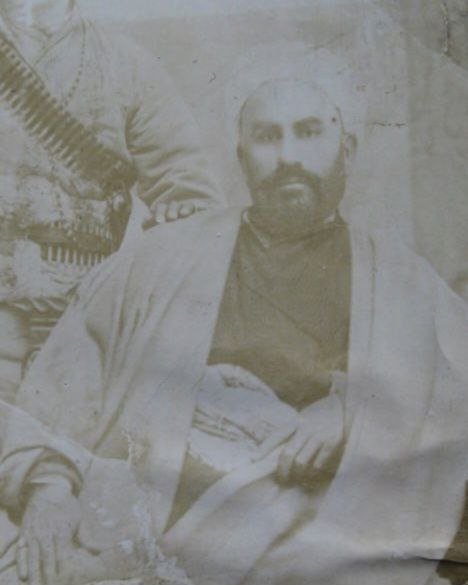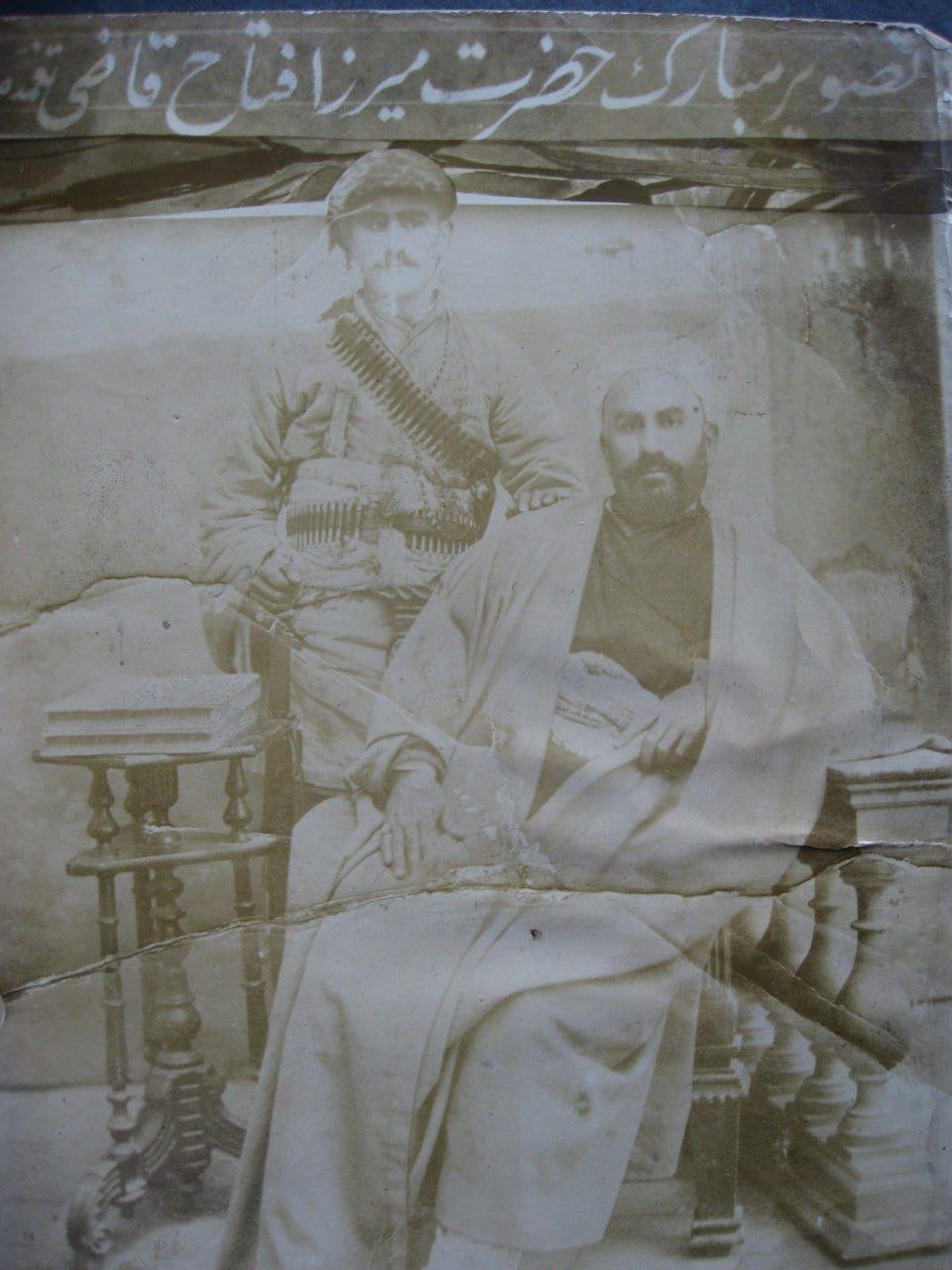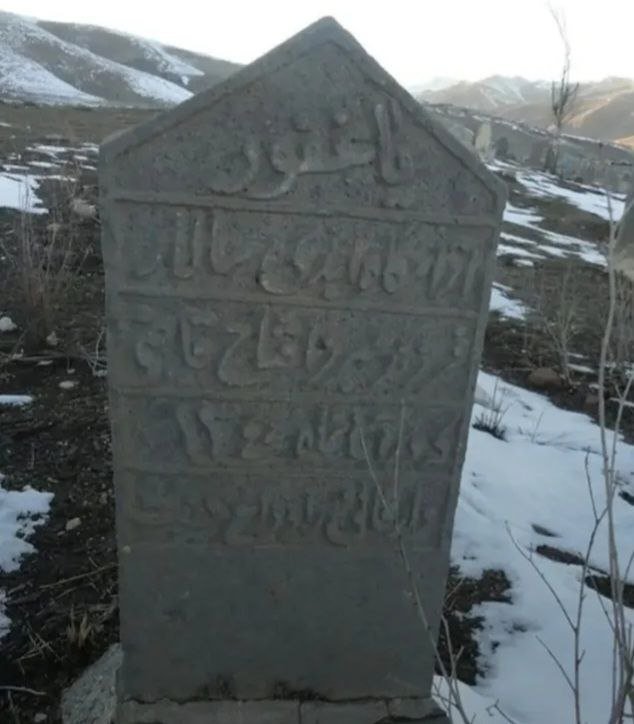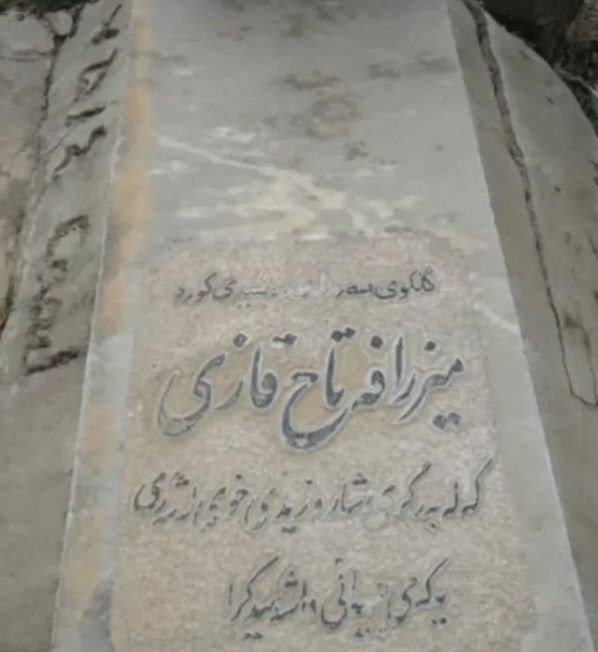
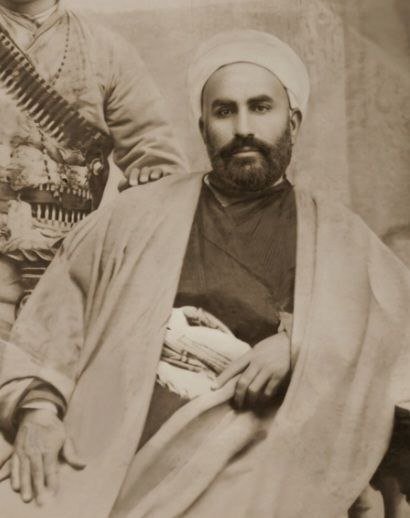
Qazi Fattah, the eldest son of Mirza Ahmad Qazi—widely known as *(Sheikh al-Mashayikh / Sheikh al-Ra'is)*—was born in the lunar Hijri year 1230 (1851 CE) in the city of Mahabad. His mother, Fatimah Khanum, belonged to the prominent Budak Sultan Mukri family. From his childhood, he studied under his father and later became a religious student *(faqih)* under the guidance of Master Mullah Gchka of Erbil. He mastered the contemporary sciences of the era, including Arabic morphology and syntax *(Sarf and Nahw)*, logic, philosophy, and theology *(Kalam)*, achieving an advanced level of scholarship at a young age. Beyond his mastery of religious sciences and philosophy, Qazi Fattah was politically astute, highly aware, and a fearless, skilled warrior in times of crisis, renowned for his exceptional marksmanship. He was also a gifted calligrapher and an accomplished poet. Due to his extensive knowledge and distinguished personality, he was entrusted with the judicial affairs *(Qadawat)* of Mahabad and its surrounding regions, following in the footsteps of his paternal ancestors. From the very beginning, Qazi Fattah was deeply conscious of the oppression and tyranny inflicted by the ruling authorities upon the Kurdish nation, and he consistently strove to resist these conditions. Consequently, he prohibited any government-appointed governor from entering Mahabad, instead entrusting the administration of the city and region to capable local Kurds. His reputation for bravery and resilience brought stability to the region; during his time, none of the regional tribes dared to approach Mahabad for plunder or oppression. Despite facing opposition from the Tsarist Russian Consulate in Mahabad, Muhammad Agha Ilkhani (the chief of the Debokri tribe), and a significant portion of the Mangur tribe—as well as encountering obstacles from a powerful rival, Muhammad Husayn Khan Mukri, who was the governor of Mahabad at the time—he never faltered and remained untiring in his pursuit of peace and security. Qazi Fattah consolidated enough power and authority that whenever a government governor engaged in misconduct, he would expel him from the city and bar him from returning to Mahabad. ### Arrest, Exile, and Resistance Qazi Fattah halted the payment of taxes to the central government and instead demanded a budget from the state for the development and public services of the city. In the year 1903 CE, the Crown Prince and Regent of the Qajar dynasty invited Qazi Fattah to the city of Tabriz, receiving him with great warmth. However, after two days of hospitality, on the third day, two regiments of soldiers surrounded Qazi Fattah’s residence, detained him, and sent him toward Tehran by carriage. The Qajar prince did not stop there; he dispatched a large force to Mahabad, forced Qazi’s family out of their home, and sent them to Tehran as well. While his family was placed in a house, Qazi Fattah was held in prison for a year. Due to the immense respect and affection he commanded among the Kurds, the authorities did not dare to execute him. After a year, he was released on the condition that he would not return to Kurdistan and would permanently reside in Tehran. Once freed from custody, he disregarded the condition of staying in Tehran and immediately returned to Kurdistan. In his very first move upon arrival, he expelled the governor of Mahabad, Farman Farmaian, from the city. A year later, in 1905 CE, he founded a Kurdish national movement, and in 1907, he aligned with the Azerbaijani liberation movement led by Sattar Khan. In 1910 CE, through deception and false promises of negotiations, the authorities arrested Qazi Fattah once again and took him back to Tehran. World War I and the Defense of Mahabad During Qazi Fattah's detention in Tehran, World War I broke out. From its onset, the flames of war engulfed northwestern Iran, specifically Kurdistan, and Mahabad found itself at the epicenter of these military campaigns and invasions. The central government lacked the capacity to halt the advances of the Ottoman and Tsarist Russian armies, and recognizing that Qazi Fattah’s leadership was vital for maintaining stability in the region, they sent him back to Mahabad. Immediately upon his return, Qazi formed a military force of several thousand Kurds from the Mukriyan region. In the Basri Valley and the Indrqash Plains, he blocked the advance of the Tsarist Russian army, preventing them from capturing Mahabad. For an entire year, the Russian forces were unable to approach the towns and villages of Mukriyan. In early 1915 CE, the Kurdish forces under Qazi Fattah's leadership launched an assault on the Russian camp, dealing them a major blow and forcing them to retreat to Savli Tapa near Miandoab. However, by the end of 1915 CE, the Ottoman forces were defeated on the Maragheh and Miandoab fronts, allowing the Russians to redeploy their troops from those sectors into Mukriyan. Consequently, the Kurds withdrew and initiated a fierce resistance from within the city itself. After several days of intense urban warfare, Russian forces managed to infiltrate the city. Qazi Fattah’s eldest son, who was fighting alongside his father in the same trench, was martyred.
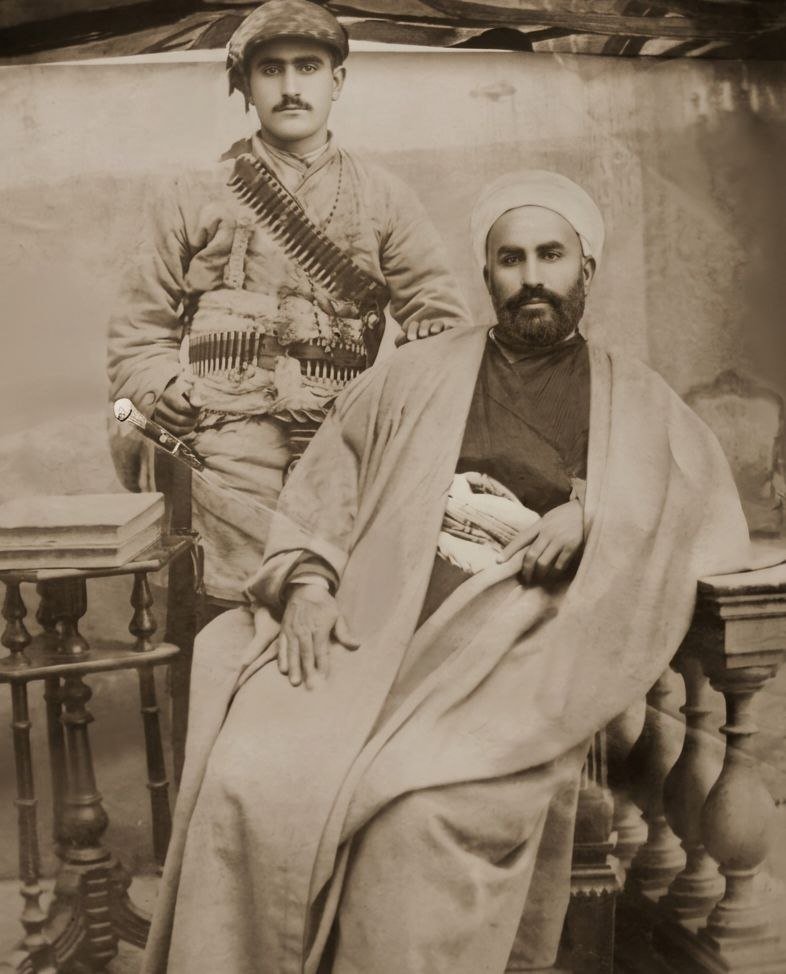
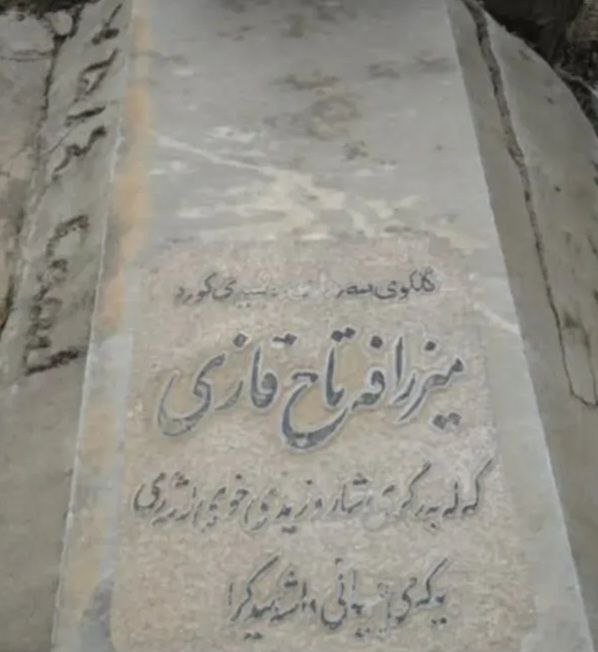
Martyrdom and Aftermath Qazi Fattah and his comrades fought to their very last bullet. Ultimately, Qazi Fattah, along with several of his relatives and companions, achieved martyrdom. His body fell into the hands of the Russian forces; to remove his ring, they severed his finger and subsequently riddled his body with gunfire. Late that night, his son, Abdulrahman, along with a few others, managed to retrieve the body and buried it in the courtyard of the Shah Darwish Mosque. This event took place in early 1916 CE. Following the martyrdom of Qazi Fattah, the Russian forces launched a massacre against the people of Mahabad. Historical records indicate that in less than seven days, they slaughtered over eight thousand residents of the city and set fire to a large portion of it. Later, Qazi Fattah's second son, Abdulrahman—known as Salar-i Mukri—along with twenty of Qazi's relatives and close associates, were arrested and exiled to Siberia, Russia, where they were held in camps for several years. In addition to being a prominent political and social figure, Martyr Qazi Fattah was a master calligrapher and a talented polyglot poet, composing poetry in Kurdish, Persian, Turkish, and Arabic.
Sources: 1. *The Lost Days (The Life and Memoirs of Rahman Qazi)* 2. *The General History of the Kurdistan Democratic Party, Volume I* (by Qasim Qazi) 3. *The National Liberation Movement of the Kurdish People and Qazi Muhammad* (by Dr. Rahim Qazi) 4. *A Brief History of the Qazi Family* (by Khalil Fattah Qazi) 5. *Freedom or the Gallows* (by Muhammad Reza Sayf Qazi) * Compiled by: Ahmad Fattah Qazi * Reviewed by: Naser Qazi